
What Alabama’s Pedestrian Numbers Show—And What They Do Not
The Alabama Law Enforcement Agency reported 120 pedestrian fatalities and 620 pedestrian injuries statewide in 2024. It also reported that pedestrian deaths increased by about 22% from 2015 through 2024.
Earlier Highway Safety Plan data show historical concentration in several urban counties. For 2018 through 2020, the plan reported 57 pedestrian fatalities in Jefferson County, 40 in Mobile County, 27 in Madison County, 25 in Montgomery County, and 11 in Tuscaloosa County. The plan treated urban counties as priority areas for pedestrian initiatives.
Those figures explain why pedestrian safety deserves attention, but they are not a current ranking of individual intersections. A useful local inquiry should examine the specific location’s crash history and conditions such as sight distance, vehicle speeds, pedestrian movements, signs, pavement markings, lighting, access points, and driver behavior.
A Practical Workflow for Raising a Pedestrian-Safety Concern
-
Define the location and concern
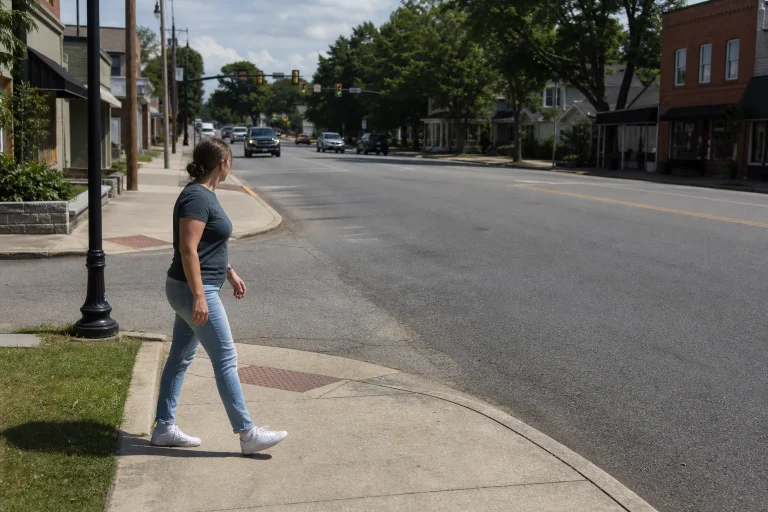
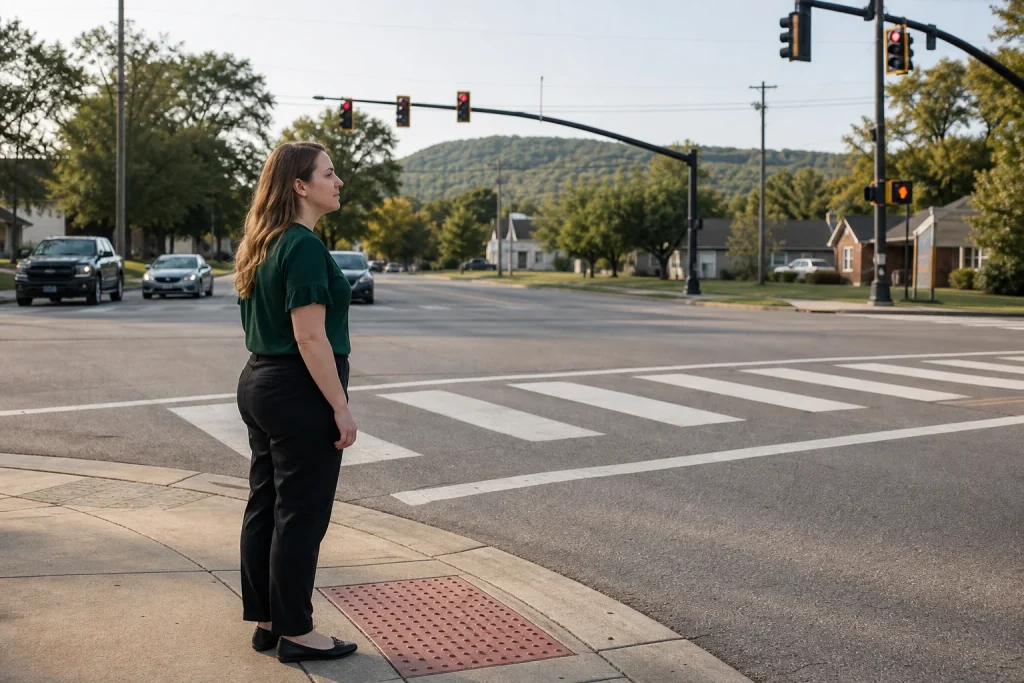
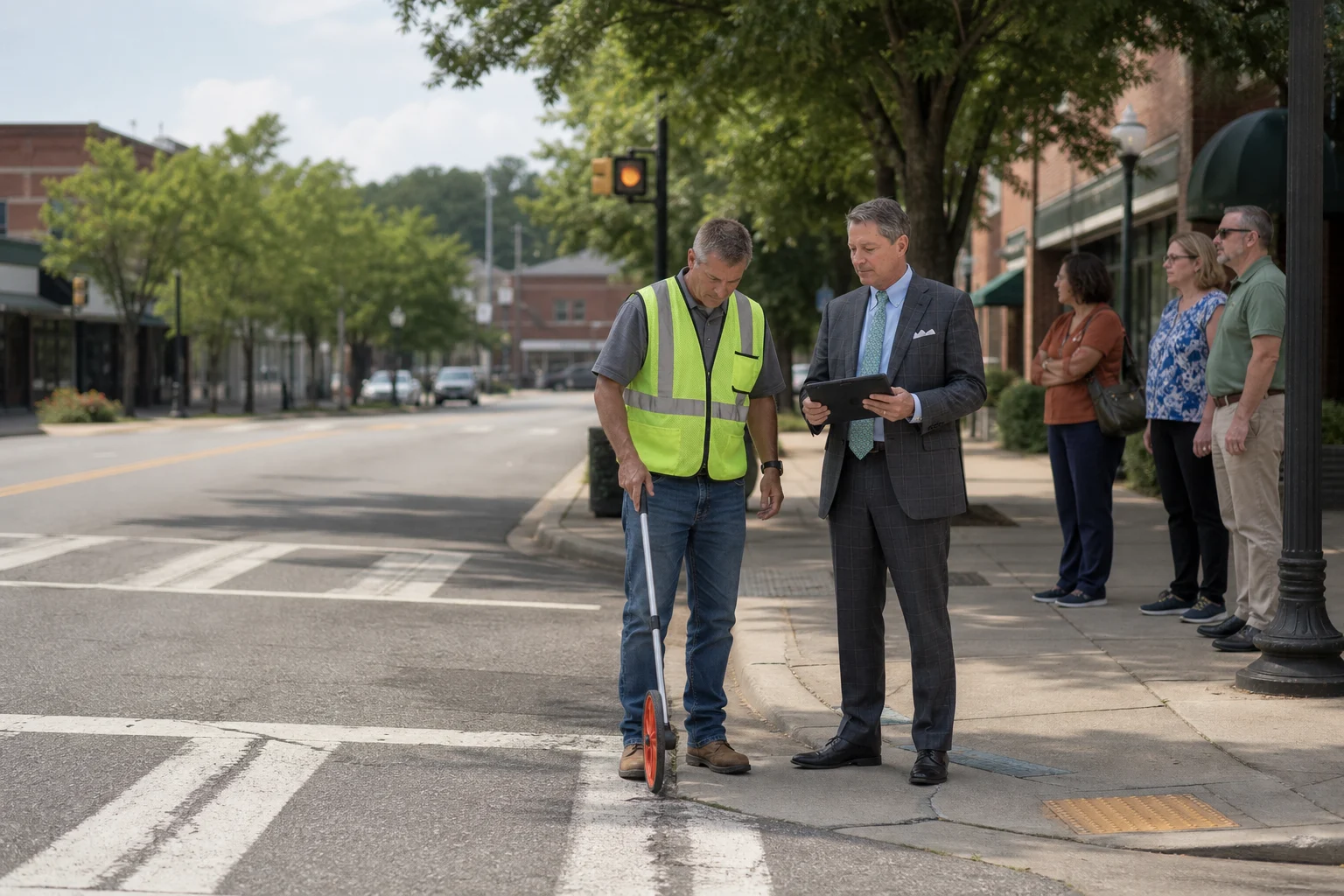
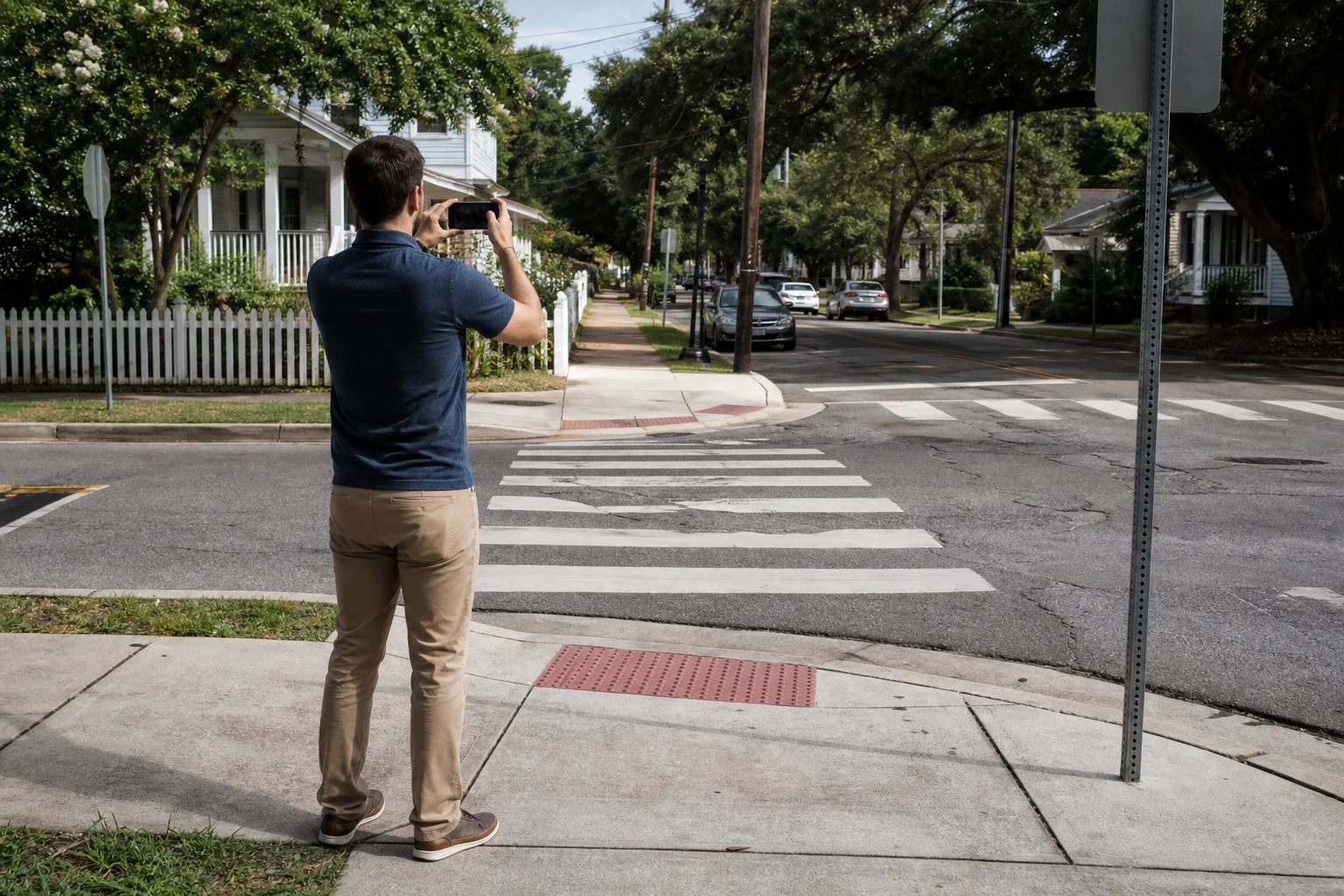
Identify the road, nearest intersection or address, travel direction, crossing path, and the condition you observed. Include dates, approximate times, photographs taken from a safe and lawful position, and a brief explanation of who may be at risk.
-
Identify who owns or maintains the road
Determine whether the location is controlled by ALDOT, a municipality, a county, or another governmental entity. If ownership is unclear, ask the first agency contacted to confirm responsibility or identify the appropriate office.
-
Submit a safety-review request
Ask the responsible road agency to inspect or evaluate the location. Identify the conditions you want considered rather than requesting only a particular outcome.
-
Send a separate request for existing records
Use a defined location, date range, and list of record categories. A public-records request should seek records that already exist, not require the agency to create a new study, answer questions, or build a custom list.
-
Address preservation and legal deadlines promptly
If a crash occurred, identify potentially important evidence and send sufficiently specific preservation notices where appropriate. Do not assume these notices or agency requests suspend a limitations period or another claim-specific requirement.
Safety Reviews, Records Requests, and Preservation Notices Are Different Tools
| Action | Primary purpose | What to request |
|---|---|---|
Safety or engineering review |
Ask the road owner to examine current conditions and consider an engineering response. |
A site inspection or review of crash history, speed, sight distance, pedestrian conditions, signs, markings, lighting, access points, and other identified concerns. |
Public-records request |
Obtain specifically identified records that the agency already maintains, subject to applicable exceptions. |
Existing studies, counts, assessments, complaints, work orders, inspection records, correspondence, or other defined records for a reasonable date range. |
Preservation notice |
Notify a holder that particular evidence may be relevant and should not be altered or destroyed. |
Precisely described material connected to a defined incident, location, date, and time period. A notice does not guarantee that the material exists or that the sender is entitled to obtain it. |
How to Write a Useful Safety-Review Request
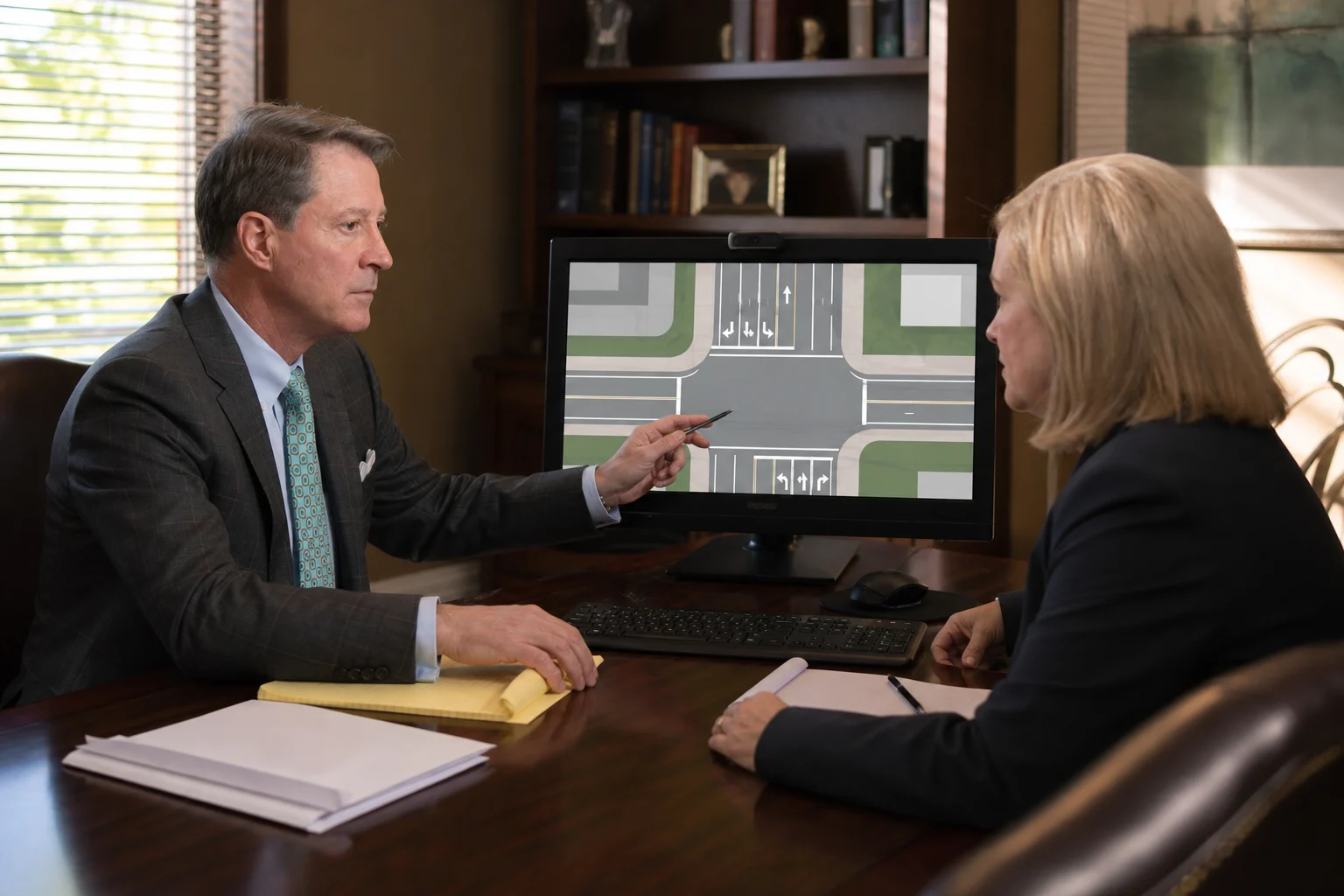
Start with the exact location and the problem you observed. Avoid relying only on a conclusion such as “this intersection is dangerous.” Explain whether the concern involves a difficult crossing, obstructed sight line, vehicle speed, faded markings, inadequate lighting, missing signs, turning conflicts, or another specific condition.
ALDOT is divided into five geographic regions, publishes regional contacts and county assignments, and provides a Report a Concern channel. If the location is on a state or federal route, those resources can help residents reach the appropriate office. For another road, direct the request to the governmental entity responsible for that location.
A focused request may ask the agency to:
- confirm whether it owns or maintains the road;
- inspect the identified location;
- review available crash history and current traffic conditions;
- consider sight distance, speeds, pedestrian and bicycle activity, signs, markings, lighting, access management, and driver behavior;
- identify whether a study is planned, underway, or already completed; and
- explain the next administrative or engineering step.
If the Request Involves a Traffic Signal
For a possible signal on a state or federal route, ALDOT guidance calls for initial consultation with the Region or Area Traffic Engineer. The engineer may inspect the site and obtain preliminary counts before deciding whether a formal study is appropriate. It is more useful to request an evaluation than to assume that a signal is the only solution.
If the Concern May Require a Funded Safety Project
A resident may bring the issue forward, but formal Highway Safety Improvement Program applications originating outside ALDOT ordinarily proceed through a governmental project sponsor and the appropriate ALDOT Area Local Transportation Engineer. The road owner may therefore need to participate before a concern can become a formal project application.
Alabama Counties With the Most Pedestrian Fatalities in the 2018–2020 Plan Data
View Data
| Label | Pedestrian fatalities, 2018–2020 |
|---|---|
| Jefferson County | 57 fatalities |
| Mobile County | 40 fatalities |
| Madison County | 27 fatalities |
| Montgomery County | 25 fatalities |
| Tuscaloosa County | 11 fatalities |
The data show historical concentration in several urban counties, but they do not establish that a particular street or intersection is currently hazardous.
Make the Public-Records Request Narrow and Concrete
Alabama residents may inspect and copy public records, subject to statutory and judicially recognized exceptions. State guidance describes a standard request as one seeking specifically identified records that require fewer than eight staff hours to process.
That guidance states that an agency generally must acknowledge a standard request within 10 days and provide a substantive response within 15 business days after acknowledgment. Different notice and response provisions apply to time-intensive requests. Keeping the request focused can make it easier for the custodian to identify responsive records and determine how the request should be handled.
Ask for existing records rather than requiring a new analysis. For example, define the intersection or road segment, give a reasonable date range, and identify relevant categories such as existing traffic counts, speed studies, road-safety assessments, signal studies, maintenance records, written complaints, work orders, or correspondence concerning a planned improvement.
Sample formulation: I request copies of existing records concerning the pedestrian crossing at [location] from [starting date] through [ending date], limited to traffic or speed studies, safety assessments, inspection records, written complaints, work orders, and correspondence concerning proposed corrective work.
The guidance also states that production fees are limited to production costs rather than ordinary record-maintenance expenses or attorney expenses. Before paying or narrowing a request, ask the custodian to explain any estimated charge and the scope of records included.
Crash Reports and 911 Materials May Follow Different Access Rules
Do not assume that every record connected to a pedestrian crash is available through an ordinary public-records request.
Individual crash reports are governed by Alabama Code § 32-10-7. The statute permits release in specified circumstances, including to a person involved in the crash—expressly including an involved pedestrian—or through a properly executed subpoena or court order.
Alabama’s 911 law distinguishes written or electronic operational records from audio recordings. Written or electronic records describing the circumstances of a call and the resulting response are treated as public writings subject to otherwise applicable law. Access to the audio recording itself is more restricted.
A focused request should identify which type of material is sought. Asking separately for an incident record, dispatch information, and an audio recording allows the custodian to apply the appropriate rule to each item.
Preservation Requires Specificity and Attention to Your Own Evidence
A public-records request seeks access. A preservation notice asks a holder not to alter or destroy identified material. Sending one does not guarantee that evidence exists, establish a right to inspect it, or create a universal preservation duty.
In Killings v. Enterprise Leasing Co., the Alabama Supreme Court explained that a third party ordinarily has no general duty to preserve evidence. A duty may arise, however, through an agreement, a voluntary undertaking, or a sufficiently specific request. Evidence concerning an agreement to preserve a wrecked van and written preservation requests created a factual issue for trial in that case.
A preservation notice should therefore identify:
- the incident, location, date, and relevant time period;
- the particular documents, data, photographs, recordings, physical items, or electronically stored information at issue;
- the request that the material not be altered, erased, discarded, repaired, or destroyed; and
- a request for confirmation or identification of the correct custodian if the notice was misdirected.
Do not state that footage must exist simply because a camera is visible. Confirm who operates the system, whether it records, and whether any responsive material exists.
Preservation also applies to evidence in the injured person’s possession. In Goins v. Advanced Disposal Services Gulf Coast, LLC, the Alabama Supreme Court upheld submission of spoliation and contributory-negligence issues after a litigant wiped a phone following a request to inspect it. Preserve relevant phones, photographs, messages, location information, clothing, and other material, and obtain legal advice before altering or disposing of them.
Local-government retention rules provide another layer of protection but do not resolve every preservation question. Alabama guidance states that a county, municipality, or other local official may not destroy or dispose of a government record without approval from the Local Government Records Commission. Applicable retention schedules still matter, so a prompt and specific notice may remain important.
Do Not Let an Agency Process Distract From Legal Deadlines
Alabama generally applies a two-year limitations period to personal-injury and other noncontractual injury claims under Alabama Code § 6-2-38. The deadline for a particular matter can depend on the claim, the parties, and other facts. Potential claims involving governmental entities may also present separate notice questions.
Do not assume that asking for a safety review, waiting for public records, or sending a preservation notice pauses any deadline. If a pedestrian crash has already caused injury or death, obtain claim-specific legal advice promptly while the safety and records processes continue.
Frequently Asked Questions
Where should I send an Alabama pedestrian-safety request?
Send it to the governmental entity that owns or maintains the road. For a state or federal route, begin with ALDOT’s published regional contacts, county assignments, or Report a Concern channel. If responsibility is unclear, ask the agency contacted to confirm ownership or identify the appropriate office.
Can I use a public-records request to make an agency conduct a new safety study?
No. A public-records request should seek specifically identified records that already exist. Request a new inspection or engineering evaluation through a separate safety-review request.
Is an Alabama pedestrian crash report available to the pedestrian involved?
Alabama Code § 32-10-7 permits release in specified circumstances, including to a person involved in the crash. The statute expressly includes an involved pedestrian. Reports may also be obtained through a properly executed subpoena or court order in appropriate circumstances.
Can I request the audio of a 911 call?
You may ask, but Alabama law treats 911 audio differently from written or electronic operational records. Records describing the circumstances and response are treated as public writings subject to applicable law, while access to the audio recording is more restricted.
Can a safety review address a location without a documented crash history?
A road-safety review can consider more than prior crashes. ALDOT guidance identifies subjects such as sight distance, speeds, pedestrian and bicycle conditions, signs, markings, lighting, access management, and driver behavior. The responsible agency determines what review is appropriate.
Does filing a safety or records request extend my injury-claim deadline?
Do not assume it does. Alabama generally has a two-year limitations period for personal-injury and other noncontractual injury claims, but the applicable deadline and any governmental notice issues are fact-dependent. Seek legal advice promptly if a crash has caused injury or death.