
Why Alabama’s Rural Roads Demand Attention
The Alabama Department of Transportation reported 140,118 crashes, 36,601 injuries, and 967 traffic fatalities statewide in 2024. Approximately 24% of reported crashes occurred in rural areas, yet rural roads accounted for 565 deaths—about 58% of all Alabama traffic fatalities that year.
The pattern extends beyond a single year. ALDOT reported statewide fatality totals of 934 in 2020, 983 in 2021, 986 in 2022, 975 in 2023, and 967 in 2024. Rural-road fatalities during those same years were 521, 520, 589, 564, and 565. Rural roads therefore accounted for more than half of Alabama traffic deaths in each of the five years shown.
Visibility Rules for Slow-Moving Farm Equipment
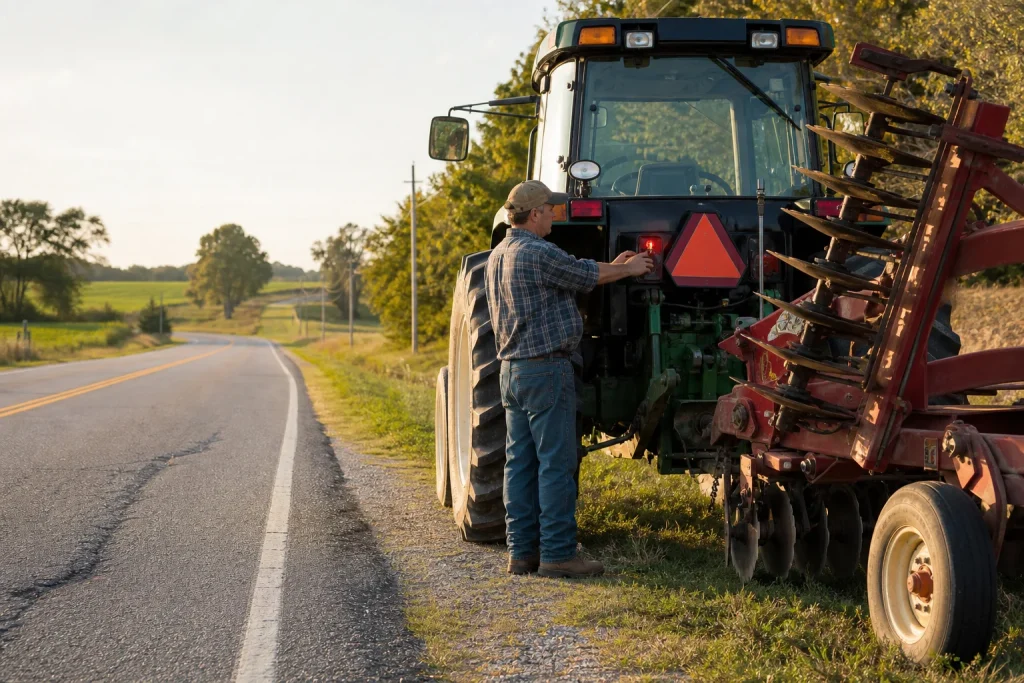
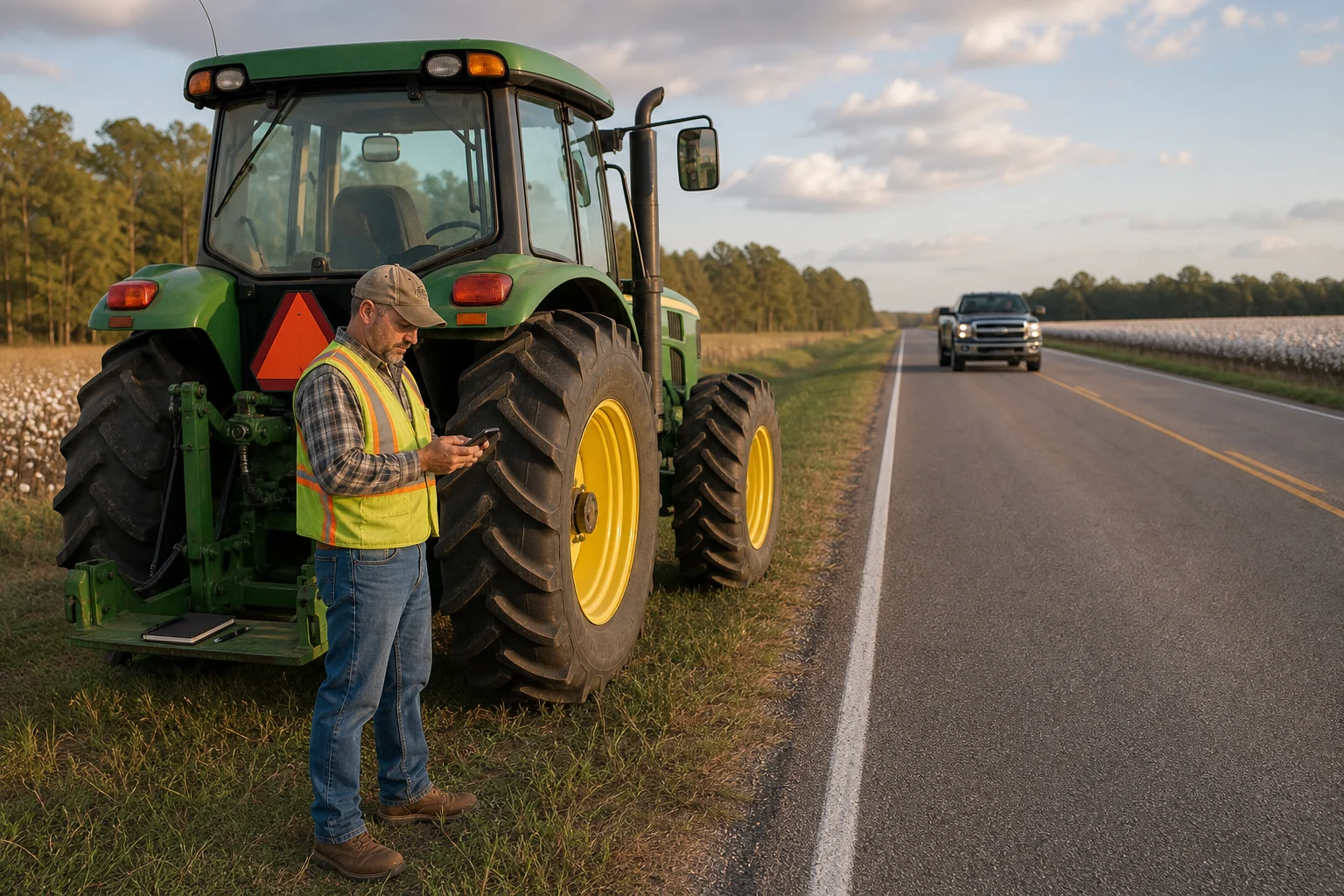
Alabama restricts the slow-moving-vehicle emblem to qualifying slow-moving vehicles; it is not a general-purpose reflector. Although a person temporarily moving a farm tractor or implement of husbandry on a highway is exempt from the ordinary driver-license requirement, that limited exemption does not necessarily remove other roadway and equipment duties.
Alabama’s lighting rules require vehicle lights during specified low-visibility periods, including:
- From one-half hour after sunset until one-half hour before sunrise.
- When windshield wipers are being used because of rain, sleet, or snow.
- When available light is insufficient to clearly discern people and vehicles at 500 feet.
Vehicles and equipment not governed by a more specific lighting provision must display a white front light and a red rear light visible from 500 feet during those periods. Alabama law also permits hazard-warning lamps to alert other road users to a traffic hazard requiring unusual care while approaching, overtaking, or passing. The statute addresses warning-light colors and requires nighttime visibility of at least 1,500 feet under normal atmospheric conditions. Turn-signal devices must be visible and understandable from 100 feet to the front and rear and maintained in working order.
Whether a particular tractor, implement, or lighting arrangement complied with these provisions depends on the equipment classification, time, weather, visibility, and other crash-specific facts.
Alabama Traffic Fatalities: Statewide and Rural Roads
View Data
| Label | Traffic fatalities by year |
|---|---|
| 2020 statewide fatalities | 934 fatalities |
| 2020 rural fatalities | 521 fatalities |
| 2021 statewide fatalities | 983 fatalities |
| 2021 rural fatalities | 520 fatalities |
| 2022 statewide fatalities | 986 fatalities |
| 2022 rural fatalities | 589 fatalities |
| 2023 statewide fatalities | 975 fatalities |
| 2023 rural fatalities | 564 fatalities |
| 2024 statewide fatalities | 967 fatalities |
| 2024 rural fatalities | 565 fatalities |
Rural roads accounted for more than half of Alabama traffic fatalities in each year shown, despite representing about 24% of reported crashes in 2024.
Fault May Depend on Both Operators’ Conduct
A collision involving a slow-moving tractor is not resolved merely by identifying which vehicle struck the other. Investigators may need to consider the equipment operator’s lighting, emblem, signals, position, and intended movement, along with the approaching driver’s speed, lookout, following distance, and decision to pass.
Alabama law requires an overtaking driver to pass on the left at a safe distance and remain to the left until safely clear. Exceeding a posted speed limit may be relevant evidence, but speed alone does not resolve whether the conduct proximately caused a civil claim.
Fault analysis is particularly consequential in Alabama because contributory negligence is an affirmative and complete defense to an ordinary negligence claim. If both parties were negligent in a way that legally contributed to the collision, the doctrine can result in neither party recovering on an ordinary negligence theory. Whether contributory negligence applies—and whether wantonness or another claim changes the analysis—requires a careful review of the specific evidence.
Evidence to Preserve After a Farm-Equipment Crash
-
Put safety and medical care first
Move out of immediate danger when possible, request emergency assistance when needed, and obtain appropriate medical evaluation. Keep discharge instructions, referrals, bills, and records of follow-up care.
-
Document the entire roadway scene
Photograph or record vehicle positions, lanes, shoulders, curves, hills, intersections, sight lines, signs, skid marks, debris, lighting, weather conditions, and nearby buildings or cameras. Wide views and close-up images can serve different purposes.
-
Preserve the tractor, implement, and other vehicles
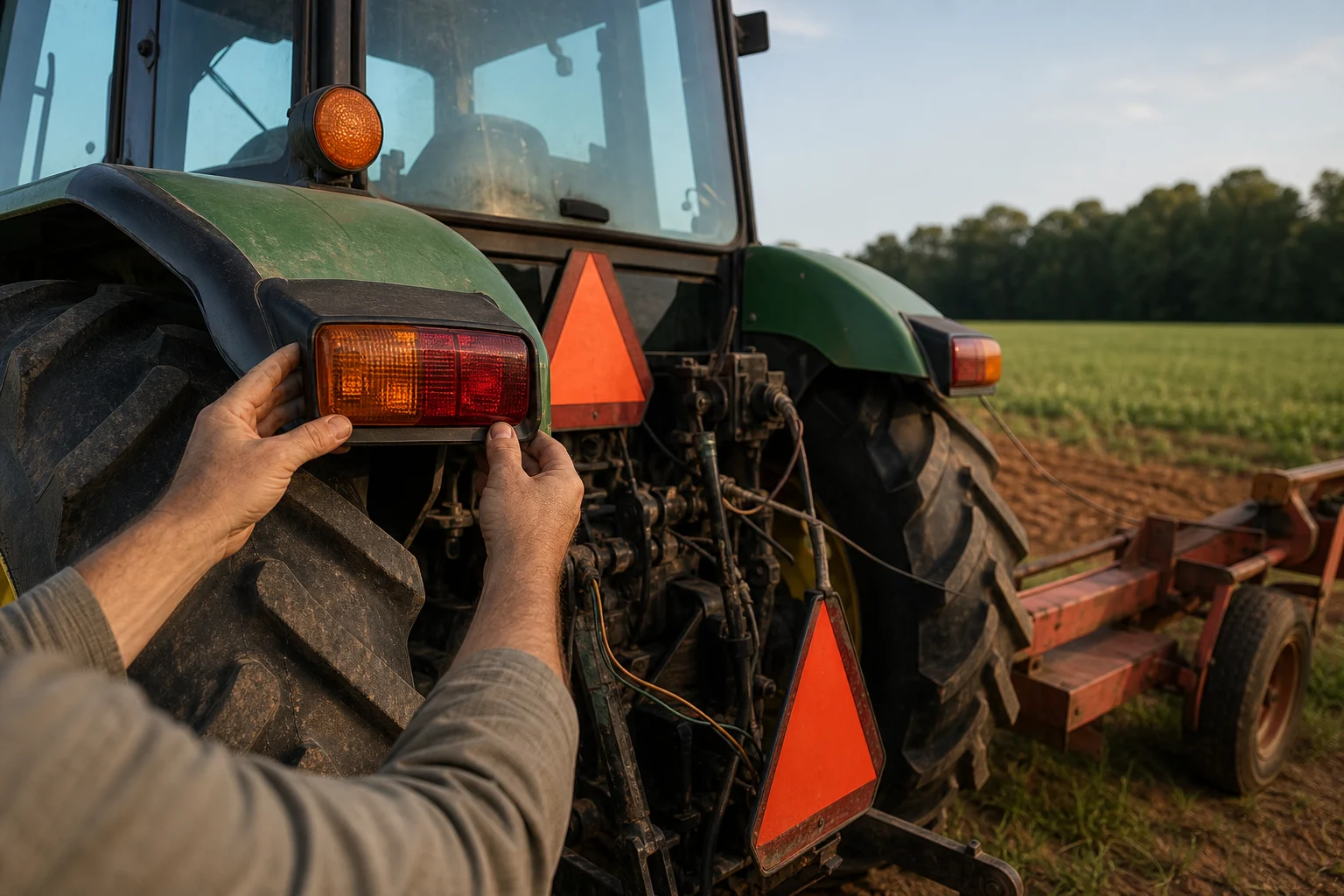
When safe and practical, avoid repairing, scrapping, or altering involved equipment before its condition has been documented. Relevant features may include lights, bulbs, reflectors, slow-moving-vehicle emblems, turn signals, tires, brakes, hitch points, damage patterns, and control settings.
-
Identify electronic and video evidence
Potential sources may include dash cameras, vehicle event data, GPS or telematics systems, mobile devices, security cameras, doorbell cameras, and recordings from nearby businesses or homes. Prompt requests may reduce the risk that routinely retained data is no longer available.
-
Collect records and witness information
Record witness names and contact information. Preserve photographs, maintenance and repair records, towing and storage documents, work logs, the crash report, and communications concerning the trip, equipment, or collision.
-
Consider formal preservation requests
An attorney can help identify evidence controlled by another driver, an equipment owner, an employer, an insurer, a towing company, or another third party and request that relevant material not be altered or destroyed.

Lost Evidence and Filing Deadlines Can Affect a Claim
When Alabama courts analyze alleged spoliation of evidence, they consider factors including the importance of the missing evidence, the responsible party’s culpability, fundamental fairness, the availability of alternative evidence, and whether a lesser sanction would be effective. Dismissal may be possible in serious circumstances, but it is not automatic. Prompt, evenhanded preservation efforts can help protect evidence held by either side or by a third party.
Ordinary Alabama personal-injury claims generally must be filed within two years under Ala. Code § 6-2-38(l). The cited provision also establishes a two-year period for certain respondeat-superior claims and states that wrongful-death actions must be commenced within two years of death. The exact deadline can vary with the claim, parties, disability provisions, and other statutes, so it should be calculated from the particular facts rather than assumed.
Frequently Asked Questions About Alabama Farm-Equipment Crashes
Is a slow-moving-vehicle emblem enough to make a tractor road-legal?
Not necessarily. Alabama limits the emblem to qualifying slow-moving vehicles, but other duties may apply to lights, signals, reflectors, and the way equipment is operated. Compliance depends on the equipment and the circumstances.
Does the driver-license exemption for a farm tractor eliminate other road-safety duties?
No. Alabama provides a limited ordinary driver-license exemption for a person temporarily moving a farm tractor or implement of husbandry on a highway. Applicable roadway, lighting, signaling, and equipment requirements may still matter.
Who is at fault if a car strikes slow-moving farm equipment?
There is no universal answer. Relevant evidence may include visibility, speed, following distance, signals, lighting, equipment position, an attempted pass, and whether the tractor was turning. Alabama’s contributory-negligence rule makes a fact-specific investigation especially important.
How long does an injured person have to bring an Alabama claim?
Many ordinary Alabama personal-injury claims are subject to a two-year filing period, but the correct deadline may depend on the claim, the parties, disability provisions, and other statutes. A case-specific deadline review should occur promptly.