
What the 2027 Vehicle Decal Does—And Does Not Do
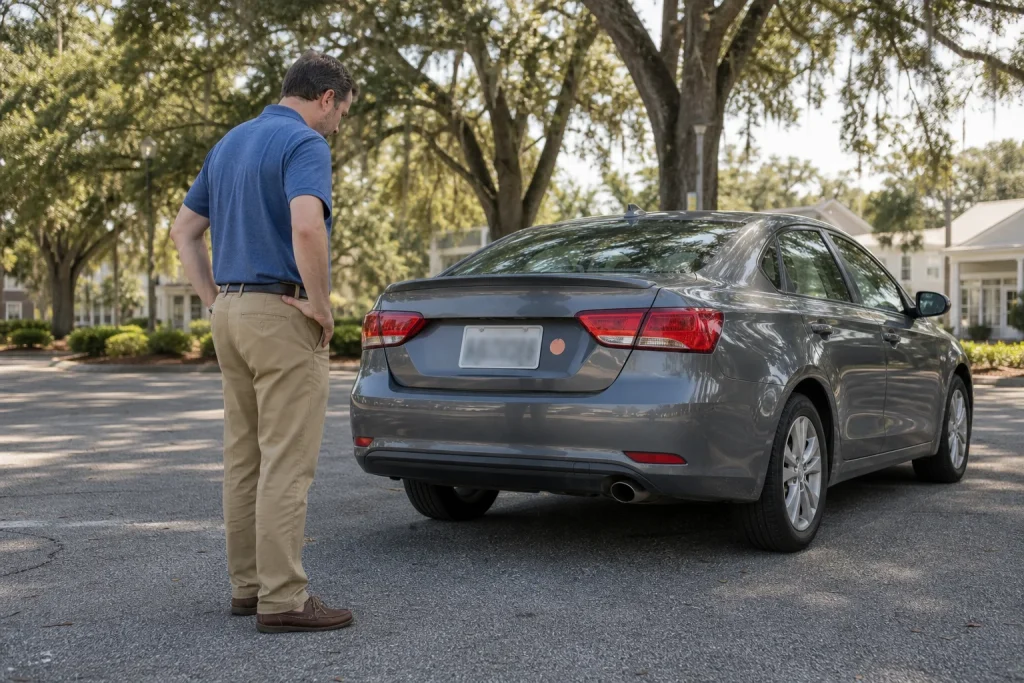
The Invisible Disability credential is a vehicle-level communication alert. Beginning January 1, 2027, an eligible Alabama vehicle owner may request the decal for a chosen Alabama license plate. The decal’s statutory purpose is to alert first responders that an occupant may have a physical or mental condition that can affect communication.
That purpose is limited. The decal does not replace a driver license or nondriver ID, and it does not provide disability-access parking privileges. It also should not be treated as identifying the communication method or response that will be appropriate in every traffic stop or emergency. The decal provides an initial cue; the circumstances and the individual’s communication needs still matter.
Alabama’s system therefore contains three credentials that may sound related but operate differently: a personal license or ID designation, a decal attached to a vehicle’s license plate, and credentials that authorize disability-access parking. Their effective dates, eligible applicants, and legal effects are not interchangeable.
How the Three Credentials Differ
| Credential | Who and where it applies | Purpose and parking effect |
|---|---|---|
Driver-license or nondriver-ID designation |
Available beginning October 1, 2026, to a diagnosed individual who provides proof from an Alabama-licensed physician. |
Places a voluntary, discrete designation on the person’s license or ID. Adding the designation alone carries no fee. It is not the vehicle decal and does not provide parking privileges. |
Invisible Disability license-plate decal |
Available beginning January 1, 2027, to an eligible diagnosed Alabama vehicle owner or a vehicle owner who is the primary caretaker of a diagnosed person. |
Alerts first responders that an occupant may have a condition affecting communication. It does not authorize disability-access parking. |
Disability-access plate or windshield placard |
May be used only when the vehicle is operated by or transporting the person issued the credential. A removable placard must be displayed while a reserved space is used. |
Provides disability-access parking privileges when the credential and applicable rules permit them. |
Eligibility and Documented Application Requirements
The vehicle-decal law identifies two potential applicant groups:
- A diagnosed Alabama vehicle owner seeking the decal for a chosen Alabama license plate.
- An Alabama vehicle owner who is the primary caretaker of a diagnosed person.
Applicants must provide diagnosis documentation from a physician licensed in Alabama. They must also meet the registration and fee requirements that apply to the chosen plate and submit the request through local license-plate issuing officials.
The caretaker provision is specific to the vehicle decal. It does not allow a caretaker to obtain the separate driver-license or nondriver-ID designation on another person’s behalf. That personal designation is available to the diagnosed individual, while the vehicle-decal law expressly includes eligible primary caretakers who own the vehicle.
Some practical details remain unsettled. The reviewed materials do not include the final application form, the required documentation format, or detailed standards for establishing primary-caretaker status. Applicants should distinguish these unresolved implementation questions from the requirements already stated in the law.


How to Prepare for the Application Process
-
Confirm which applicant category applies
Determine whether the applicant is a diagnosed Alabama vehicle owner or an Alabama vehicle owner who serves as the diagnosed person’s primary caretaker.
-
Obtain physician documentation
The law requires diagnosis documentation from a physician licensed in Alabama. Final forms or documentation formats may be clarified before the effective date.
-
Review the vehicle’s registration requirements
The applicant must meet the registration and fee requirements that apply to the chosen Alabama license plate.
-
Check with the local license-plate issuing official
Applications are to be handled through local issuing officials. Check official Department of Revenue and local instructions closer to January 1, 2027, for the final form and procedures.
What the Decal May Mean During a Traffic Stop or Emergency
The Alert Is a Cue to Assess Communication Needs
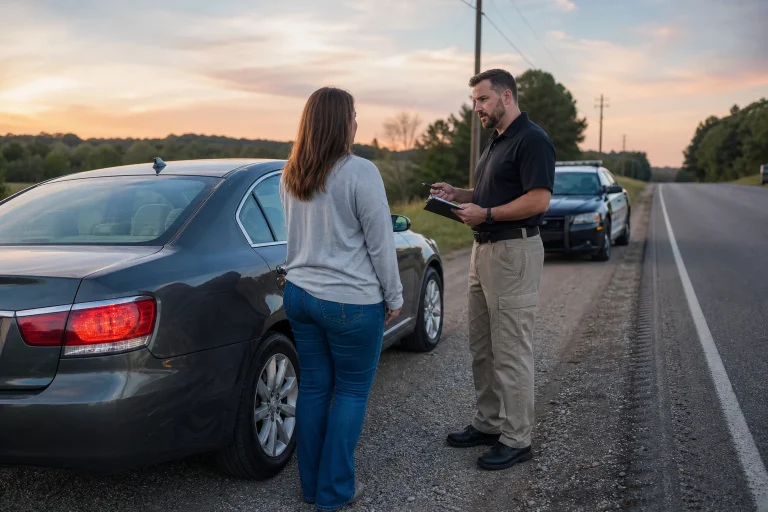
The decal’s statutory purpose is to alert first responders that an occupant may have a condition affecting communication. It does not determine which communication method or accommodation will be appropriate in a particular encounter.
U.S. Department of Justice guidance notes that disability-related conduct—including difficulty hearing or speaking, unusual movement, slurred speech, an unsteady gait, or seizure activity—can sometimes be mistaken for defiance, suspicious behavior, or intoxication. The guidance recommends clear, patient, and adaptable communication.
Existing Training and ADA Obligations Still Matter
Since January 1, 2024, Alabama has required law-enforcement officers certified by the Alabama Peace Officers’ Standards and Training Commission to complete one hour of training every other year on interactions with people who have sensory needs or invisible disabilities.
Title II of the Americans with Disabilities Act applies to state and local law-enforcement services. Depending on the circumstances and the person’s usual communication method, effective communication may require an auxiliary aid or service.
The decal may provide an early indication that communication needs should be considered, but it cannot predict how an individual encounter will unfold. First-responder assessment, patient communication, and the circumstances of the encounter remain important.


Accessible-Parking Rules Remain Separate
A vehicle displaying the Invisible Disability decal still needs a separate qualifying disability-access plate or windshield placard before using a reserved accessible-parking space. The communication decal neither substitutes for a parking credential nor changes the rules governing who may use one.
Under Alabama administrative rules, a disability-access parking credential may be used only when the vehicle is being operated by or transporting the person to whom the credential was issued. When a removable placard is used, it must be displayed while the vehicle occupies the reserved space.
This means that the presence of the Invisible Disability decal alone is not enough, even if the vehicle owner or an occupant has a diagnosed condition. Accessible-parking authority depends on a separate qualifying credential and compliance with the rules for that credential.
The distinction also has legal consequences. Alabama law classifies false acquisition or misuse of an actual disability-access plate or parking placard as a Class B misdemeanor. Using an expired parking placard in a reserved space is a Class C misdemeanor.
What Is Enacted and What Remains Unresolved
The statute establishes the decal’s effective date, basic eligibility categories, physician-documentation requirement, application channel, and communication-focused purpose. It also provides that KultureCity is to design the decal, subject to approval by the Alabama Commissioner of Revenue. The Department of Revenue may adopt implementing rules.
The materials reviewed do not yet provide several practical details prospective applicants may want to know, including:
- The final application form and documentation format.
- The approved appearance of the decal.
- The procedure for replacing a lost or damaged decal.
- Detailed standards for proving primary-caretaker status.
The statute ties the decal’s validity to reissuance of the underlying plate, but additional administrative guidance may clarify how that requirement will operate in practice. Prospective applicants should review official Department of Revenue and local issuing-office instructions before applying rather than relying on unofficial forms or assumptions.
Frequently Asked Questions
When does Alabama’s Invisible Disability license-plate decal become available?
The vehicle-decal law becomes effective January 1, 2027.
Is the Invisible Disability decal a parking placard?
No. It is a decal for a chosen Alabama license plate, not a removable windshield placard. It does not independently authorize disability-access parking.
Can a primary caretaker apply for the vehicle decal?
Yes. An Alabama vehicle owner who is the primary caretaker of a diagnosed person may seek the decal, subject to physician-documentation, registration, fee, and other applicable requirements.
Is the vehicle decal the same as the license or ID designation?
No. The voluntary driver-license or nondriver-ID designation begins October 1, 2026, and is available to the diagnosed individual. The vehicle decal begins January 1, 2027, and may also be requested by an eligible primary caretaker who owns the vehicle.
What physician documentation will be required?
The applicant must provide diagnosis documentation from a physician licensed in Alabama. The sources reviewed do not provide the final application form or detailed documentation format, so applicants should check official instructions when implementation materials are released.
Does the statute resolve every privacy question about the decal?
No. The statute describes the decal as a general alert that an occupant may have a condition affecting communication, but the final decal image and application materials were not included in the sources reviewed. Privacy-conscious applicants should examine the final Department of Revenue materials before applying.