


What Huntsville Has Announced—And What Remains Undecided
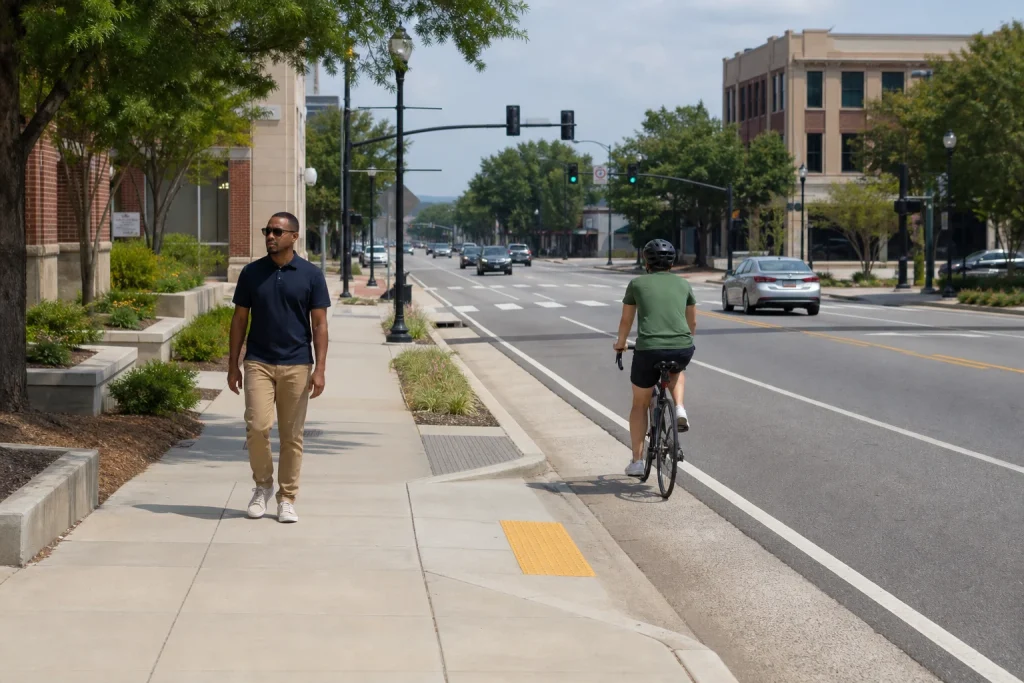
The federal project description includes protected bicycle facilities, crosswalks, continuous ADA-compliant sidewalks, pedestrian lighting, safety striping, intersection and railroad signal improvements, and accessible bus stops with shelters.
Those broad commitments reveal the project’s direction, but not every engineering choice. Published final plans have not established the exact location or configuration of each crossing, bicycle facility, signal treatment, shelter, or accessible connection. A particular crossing should not be assumed to include a beacon, refuge island, or other device unless the final plans identify it.
That distinction matters because safety performance often depends on details: where a crossing is placed, how visible it is, how much separation a bicycle facility provides, and whether sidewalks, curb ramps, crossings, and transit stops form one continuous route.

How the Planned Features May Address Different Risks
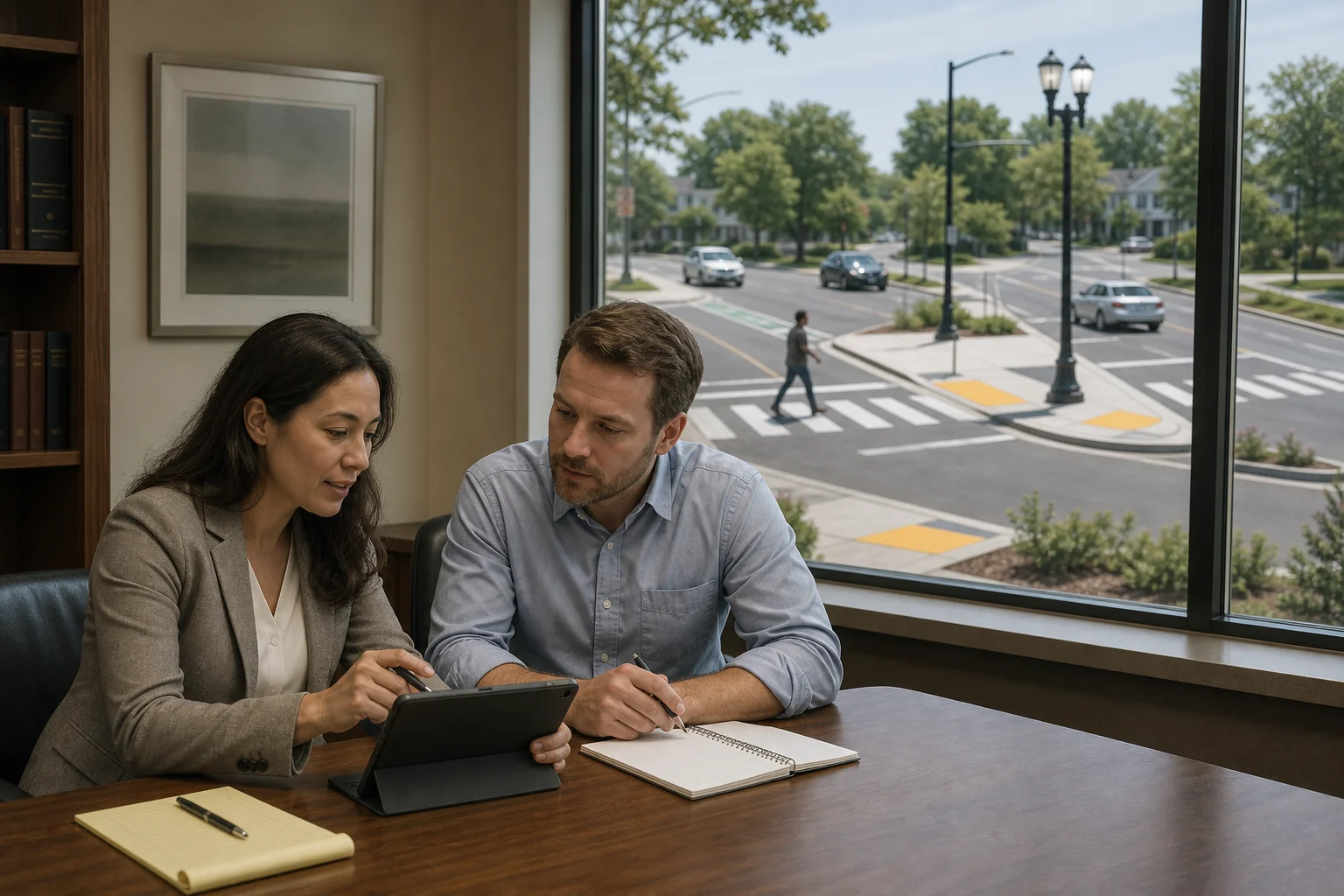
| Planned feature | Safety or access purpose | What remains design-dependent |
|---|---|---|
Crosswalks and signal improvements |
Create more visible and predictable places for people to cross while helping separate pedestrian and vehicle movements. |
Crossing locations, signal timing, visibility treatments, and any supplemental devices. |
Pedestrian lighting |
Improve the ability of drivers and pedestrians to detect one another at night. |
Fixture locations, illumination levels, maintenance, and coverage at crossings and intersections. |
Continuous sidewalks and ADA features |
Give people a defined route outside vehicle travel lanes and support access for people with disabilities. |
Route continuity, curb-ramp geometry, detectable warnings, slopes, obstructions, and crossing connections. |
Protected bicycle facilities |
Add separation where the corridor currently lacks bicycle buffers or protective features. |
Type of separation, driveway crossings, intersection transitions, sight lines, and maintenance. |
Accessible bus stops and shelters |
Support safer boarding, waiting, and travel between the sidewalk and transit service. |
Boarding-area dimensions, accessible connections, shelter placement, and nearby crossing access. |
Striping and railroad or intersection signal work |
Clarify expected movements and improve traffic control at conflict points. |
Final lane assignments, markings, timing, and coordination among signals. |
Why Individual Features Must Work as a System
A marked crossing is not automatically the right treatment by itself. Federal Highway Administration guidance recommends pairing marked crossings, where conditions warrant, with measures such as stronger lighting, pedestrian beacons, refuge islands, roadway narrowing, or signal changes.
FHWA associates crosswalk-visibility enhancements with estimated pedestrian-crash reductions of approximately 23% to 48%. It estimates that intersection lighting may reduce nighttime pedestrian crashes by approximately 21% overall and injury crashes by approximately 27%. Those ranges depend on factors such as speed, traffic volume, geometry, lighting, and the treatment selected.
Sidewalks address a different risk. FHWA associates them with an estimated 88% reduction in pedestrian crashes involving people walking along the roadway. That estimate concerns a specific crash type; it is not a prediction that the entire Holmes Avenue project will reduce all crashes by 88%.
Alabama Roadway Fatalities, Selected Years
View Data
| Label | roadway fatalities |
|---|---|
| 2014 | 820 |
| 2019 | 930 |
| 2021 | 983 |
| 2022 | 986 |
| 2023 | 975 |
Statewide roadway fatalities rose from 820 in 2014 to 975 in 2023, though these figures do not measure safety conditions on Holmes Avenue specifically.
Protected Bicycle Facilities Could Address a Clear Corridor Gap
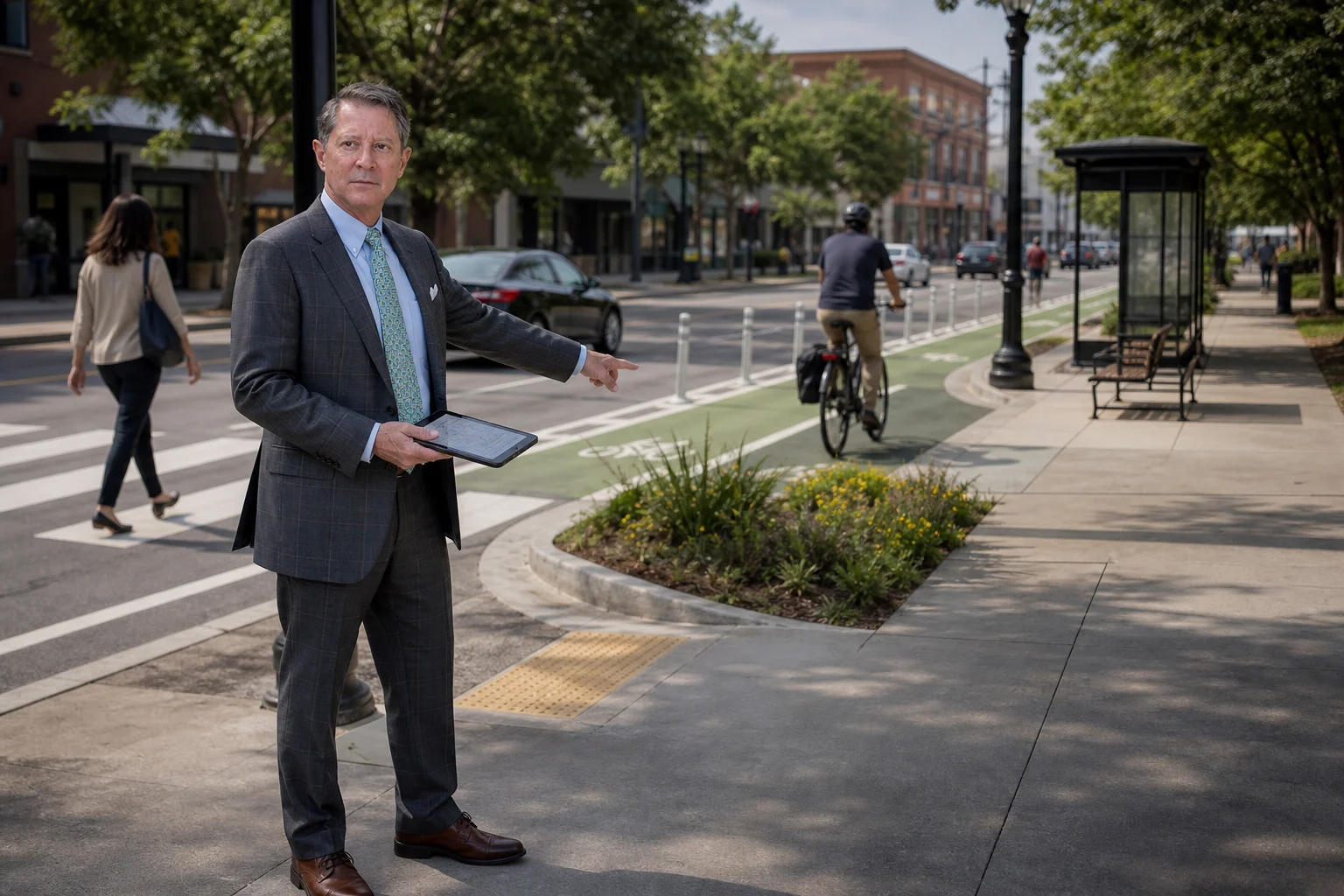
USDOT’s description specifically identifies the current lack of bicycle buffers or protective features on Holmes Avenue. A protected or separated facility can address that gap by creating space between bicyclists and motor vehicles.
The label alone does not determine performance. Important details include the form of separation, what happens where the facility crosses driveways, how bicyclists and turning drivers interact at intersections, whether sight lines remain clear, and how the facility will be maintained.
Alabama generally gives bicyclists using roadways the rights and duties applicable to vehicle drivers. The state’s passing rule also defines a safe passing distance from a bicycle as at least three feet on a road with a marked bicycle lane and under certain other specified conditions. New facilities can improve organization and separation, but lawful, attentive behavior will remain important.
ADA Access Means a Connected Route, Not an Isolated Ramp
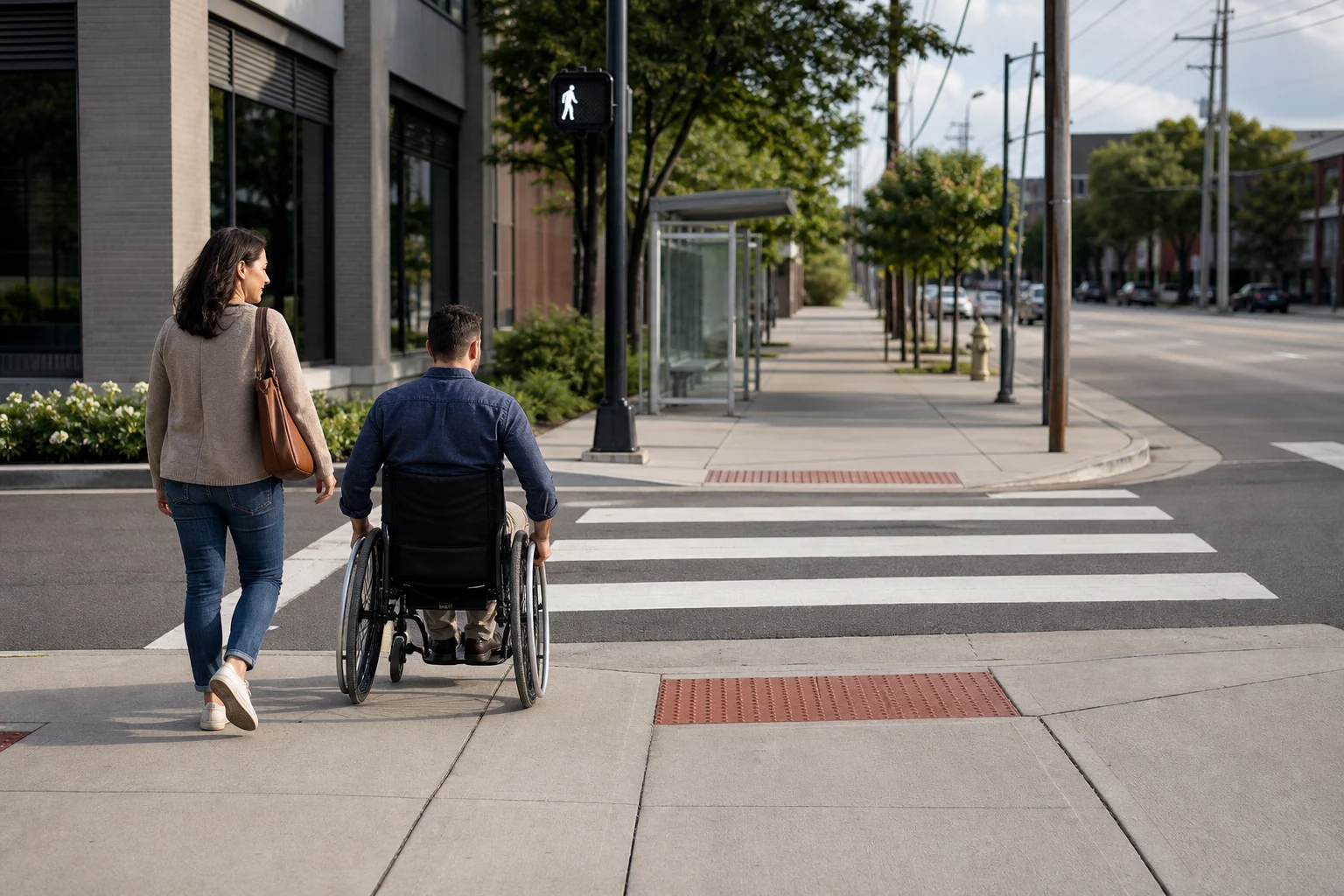
Title II of the Americans with Disabilities Act generally calls for curb ramps or comparable sloped transitions where newly constructed or altered state and local government pedestrian routes cross curbs. That includes designated midblock crossings and public-transportation stops.
Federal public-right-of-way accessibility guidance addresses sidewalks, crosswalks, pedestrian signals, curb ramps, detectable warning surfaces, refuge islands, shared-use paths, and transit stops. Together, those elements illustrate why accessibility must be evaluated as a route rather than by counting individual ramps or shelters.
For Holmes Avenue, the practical question will be whether people can move continuously among sidewalks, crossings, boarding areas, and shelters. Final compliance cannot be evaluated from the broad project description alone; it will depend on the detailed plans and completed field conditions.
Transit access also creates a crossing issue. Federal guidance recognizes that riders often cross a road before or after a trip and recommends considering marked crossings together with lighting, refuge areas, narrowed crossings, signals, or traffic-calming measures when conditions call for them.
Statewide Data Show the Stakes, Not the Holmes Avenue Result
Alabama recorded 975 roadway fatalities in 2023, compared with 820 in 2014. Urban fatalities increased from 276 to 411 over that period.
The state’s 2023 data also included 568 crashes in which striking a pedestrian was the first harmful event, resulting in 70 fatalities. Alabama recorded 176 crashes involving bicyclists, resulting in seven fatalities.
These figures provide statewide context only. They do not measure conditions on Holmes Avenue and should not be used to predict how many crashes the Huntsville project will prevent.
What to Watch as Final Engineering Advances
The final plans should provide the information needed to evaluate whether the announced features form a coherent safety system. Important questions include:
- Crossing design and spacing: Where will crossings be placed, and what visibility, signal, or refuge treatments will accompany them?
- Bicycle continuity: How will the protected facilities handle driveways, intersections, rail crossings, and transitions at each end?
- Signal coordination: How will intersection and railroad signals account for pedestrian and bicycle movements?
- Nighttime visibility: Which crossings, stops, and conflict points will receive pedestrian lighting?
- Accessible-route continuity: Will sidewalks, curb ramps, detectable warnings, crossings, boarding areas, and shelters connect without avoidable gaps?
- Transit access: How will riders reach each stop from both sides of Holmes Avenue?
These details will be more useful than any single project label when assessing the likely safety and accessibility benefits.
Alabama Road Rules Will Still Apply
At an Uncontrolled Crosswalk
An Alabama driver must yield, slowing or stopping if necessary, to a pedestrian on the driver’s half of the roadway or approaching closely enough from the opposite half to be in danger. A pedestrian may not suddenly leave a curb or other place of safety and enter the path of a vehicle that is too close to stop safely.
Outside a Crosswalk
Outside a marked crosswalk or an unmarked crosswalk at an intersection, a pedestrian generally must yield to roadway traffic. Between adjacent intersections controlled by traffic signals, pedestrians may cross only within a marked crosswalk.
For Bicyclists and Passing Drivers
Bicyclists generally remain subject to the rights and duties that apply to vehicle drivers. Where Alabama’s specified safe-passing conditions apply, drivers must provide at least three feet when passing a bicycle. A protected facility may reduce some interactions, but it does not replace the road rules governing movements and passing.
Frequently Asked Questions
When is Holmes Avenue construction expected to begin?
Huntsville’s February 26, 2026 update projects construction near the end of 2027, with completion anticipated in summer 2030. Those dates are published projections rather than guarantees.
Are the exact crosswalk and bicycle-facility designs final?
No. The city and USDOT have identified the broad types of planned improvements, but published final plans have not established the precise design or location of every crossing, bicycle facility, signal treatment, or bus stop.
Will Holmes Avenue receive pedestrian beacons or refuge islands?
The available project description does not confirm a particular device for any individual crossing. Beacons, refuge islands, lighting, and signal changes are examples of treatments engineers may consider, but the final plans must identify what will actually be installed.
How much will the project reduce crashes?
No verified project-specific percentage is available. FHWA estimates can help engineers compare treatments, but they depend on site conditions and should not be presented as a guaranteed Holmes Avenue result.
What does an ADA-compliant corridor require?
Accessibility involves connected sidewalks, curb transitions, crossings, pedestrian signals, detectable warnings, and transit-stop access—not merely an isolated ramp or shelter. Whether Holmes Avenue meets applicable requirements will depend on the final plans and completed conditions.