


Three Types of Event Injury Claims
| Type of incident | Central questions | Potentially important evidence |
|---|---|---|
Physical hazard |
What was unsafe, who created or knew about it, and could an attendee reasonably recognize the danger? |
Scene photographs, video, lighting conditions, cleaning records, inspection records, repair history, and witness accounts |
Crowd-control failure |
Was crowd pressure or movement foreseeable, and were the layout, staffing, barriers, and instructions reasonable for the expected attendance? |
Event plans, attendance information, barriers, queue layouts, staffing assignments, announcements, security communications, and video |
Third-party assault |
Was the particular criminal conduct foreseeable, and did a qualifying relationship or special circumstance create a duty to take protective measures? |
Prior warnings, threats, incident reports, calls for assistance, security plans, staffing information, communications, and witness statements |
Slips, Stairs, Bleachers, and Other Physical Hazards
When Alabama’s business-invitee rules apply, a premises owner has a duty to maintain reasonably safe premises and warn about hidden defects that ordinary care would not reveal. That duty does not make an owner the insurer of every visitor’s safety.
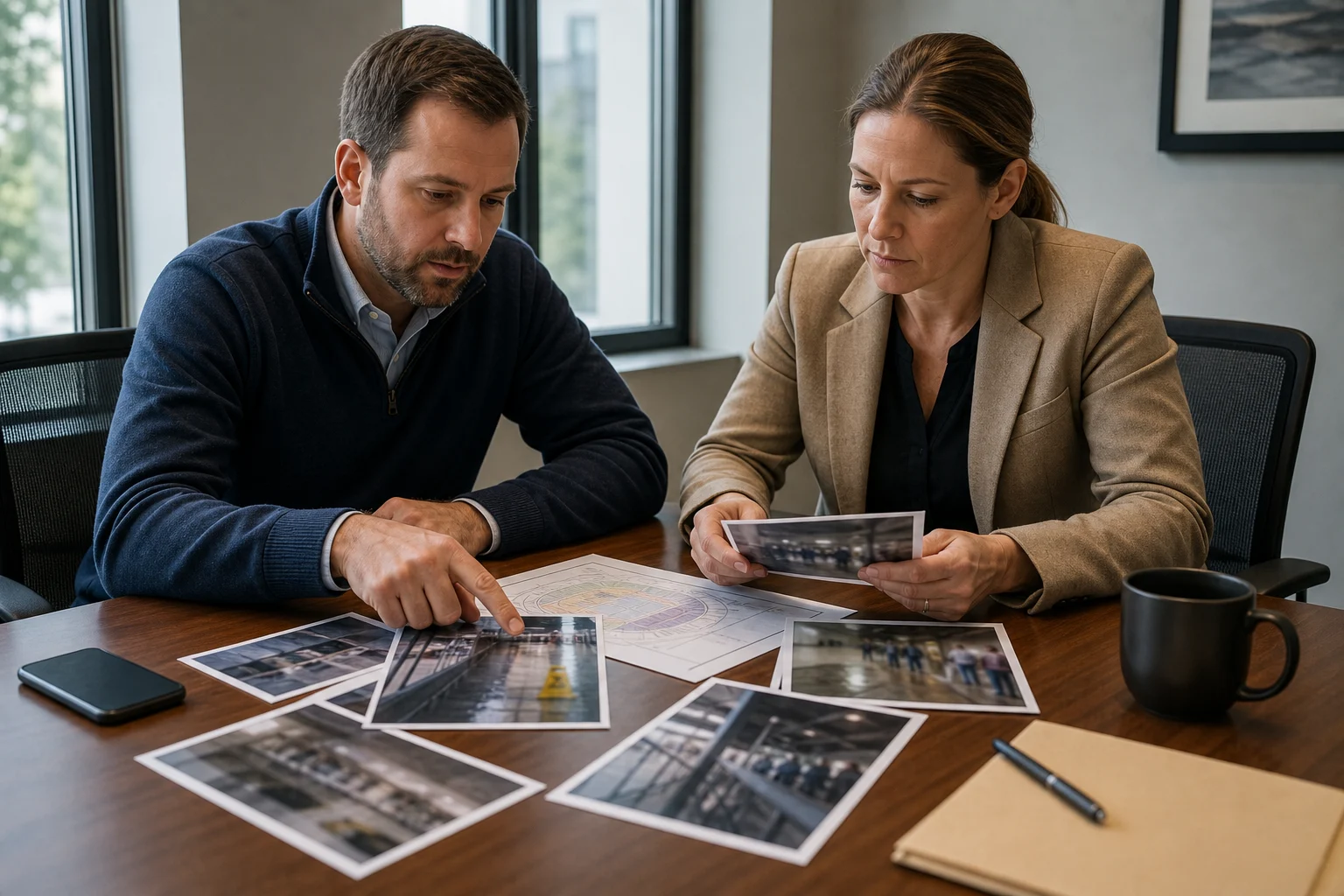
A physical-hazard investigation should identify the condition precisely. A description such as “I fell near the concession area” is less useful than evidence showing whether the incident involved a liquid, loose mat, broken seat, missing handrail, uneven walking surface, poor lighting, obstructed route, or another specific condition.
Notice is often a central issue in a foreign-substance fall. Relevant questions may include how long the substance was present, whether anyone reported it, and when the area was last inspected. If the defendant or its employees created the hazardous condition, Alabama law may permit notice to be imputed without separate proof of actual or constructive notice.
The defense may also argue that the condition was open and obvious. Alabama applies an objective inquiry that asks whether a reasonable person in the injured attendee’s position would have recognized the condition and its risk. Lighting and other surrounding circumstances can make that analysis fact-dependent.
The 2010 ADA Standards classify stadiums, arenas, amphitheaters, and grandstands as assembly areas and address features such as accessible routes, wheelchair spaces, circulation paths, stairs, ramps, handrails, and seating. Whether those standards or another building requirement apply—and what legal effect they may have in an Alabama negligence case—depends on the venue, jurisdiction, alteration history, and incident date.
Historical national data also illustrate why the exact fall mechanism matters. The Consumer Product Safety Commission estimated that emergency departments treated about 22,100 bleacher-associated injuries in 1999, including approximately 13,000 fall injuries. In that historical estimate, 48% of bleacher-associated fall injuries involved the head. These figures are not current Alabama injury rates and do not identify what caused any particular incident.
When Crowd Movement Creates the Danger
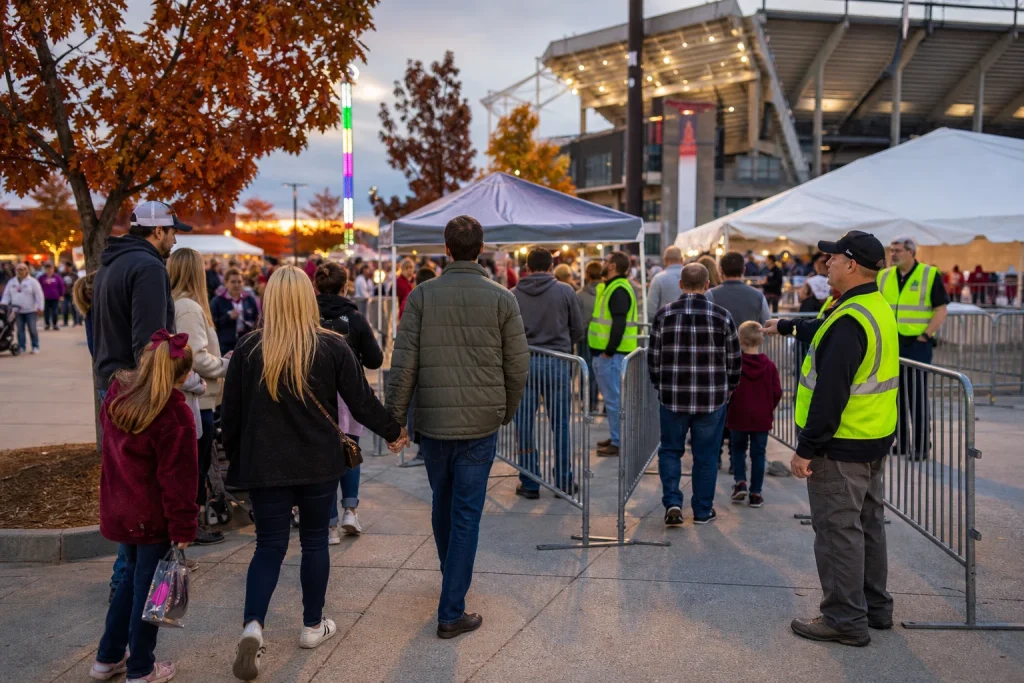
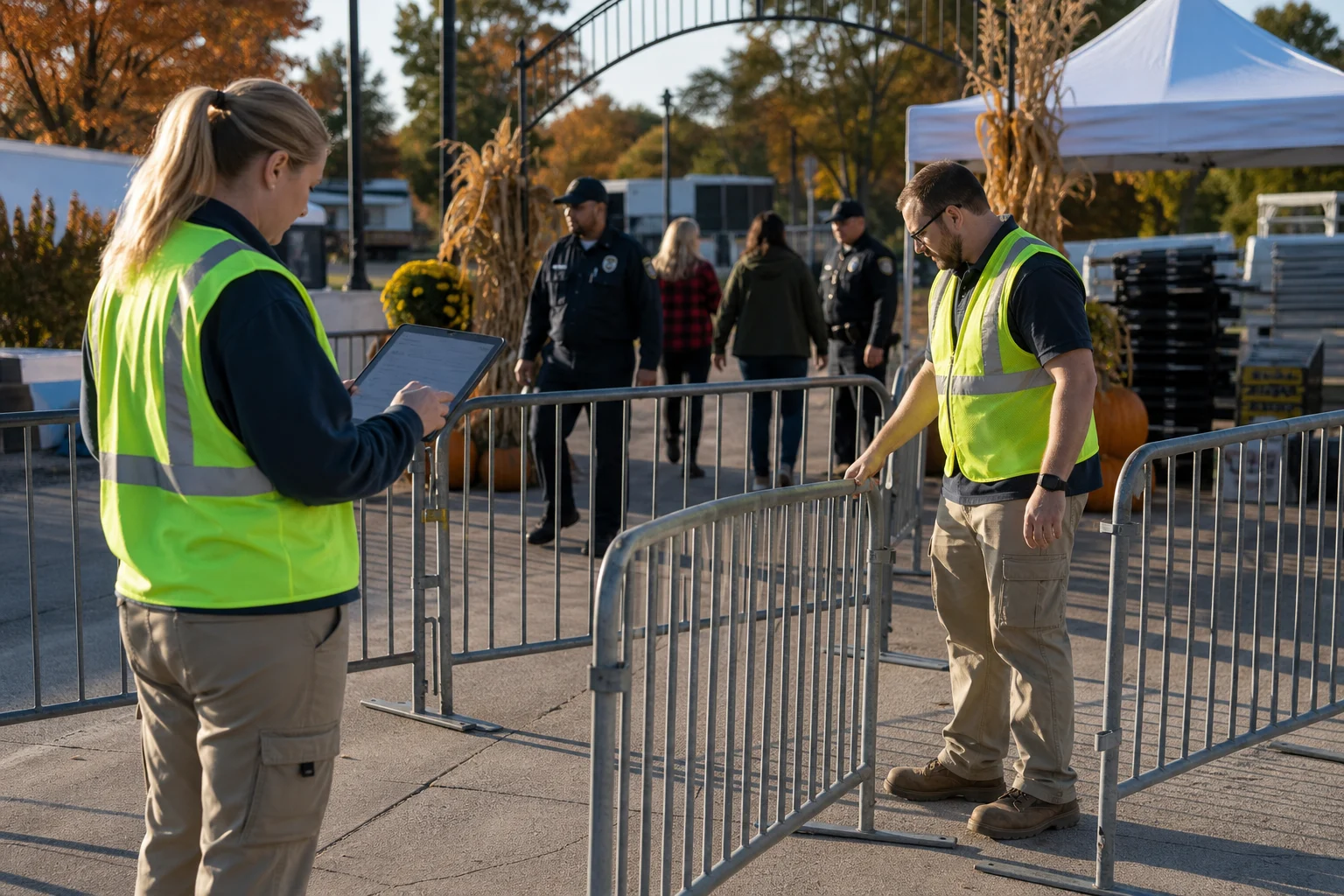
A crowd-control claim is not simply another version of a slip-and-fall case. The dangerous force may come from people pressing toward an entrance, stage, giveaway, exit, or restricted area rather than from a defect in the floor.
Alabama authority recognizes that when a proprietor’s promotional activity causes a crowd to assemble, reasonable care must be proportionate to foreseeable risks from crowd pressure, pushing, shoving, or jostling. The precautions reasonably needed may be greater when children or elderly people are present.
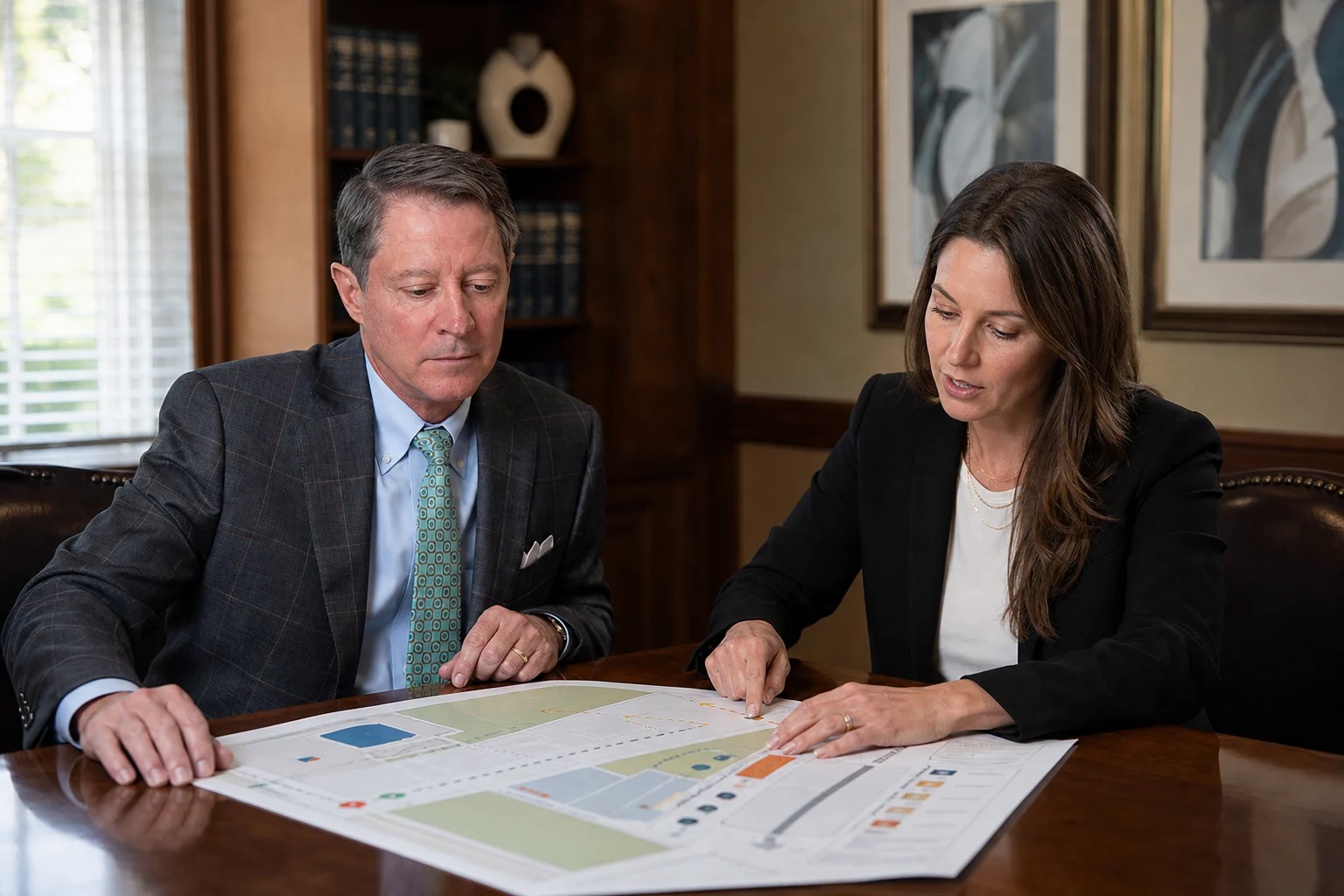
The investigation should look at the event as an operation, including expected attendance, entry and exit points, choke points, queue design, temporary barriers, staffing, instructions, emergency routes, communications, and coordination among event personnel. CISA’s Mass Gathering Security Planning Tool addresses similar planning subjects, including venue characteristics, crowd management, entry controls, screening, emergency plans, communications, and coordination with law enforcement and first responders. That federal planning guidance does not automatically establish the Alabama negligence standard for a particular event, but it can help identify factual areas that deserve investigation.
Security Claims After an Assault
An assault by another attendee raises a different question from a defective stair or uncontrolled crowd. The person who committed the assault may bear direct responsibility, but a separate claim against a venue, operator, promoter, or security provider requires its own legal and factual analysis.
Alabama generally does not impose a duty to protect another person from third-party criminal conduct unless a special relationship or special circumstances exist. Foreseeability of the particular criminal conduct is a central issue in evaluating a premises claim.
That makes the sequence before the assault important. Investigators may need to determine whether event personnel received a threat or request for help, observed escalating behavior, removed or readmitted anyone, changed staffing, or communicated with law enforcement. The mere fact that security personnel were present—or that an assault occurred—does not answer whether a particular defendant had and breached a legal duty.
Responsibility Depends on Control
Large events often involve several organizations. The property owner may not operate the event. A promoter may control ticketing and attendance while a concessionaire controls one area, a contractor handles cleaning, and a separate company provides security.
A useful investigation identifies each organization and asks what it controlled:
- Who owned or leased the property?
- Who organized and promoted the event?
- Who controlled the location where the injury occurred?
- Who installed temporary seating, barriers, flooring, or signs?
- Who inspected and cleaned the area?
- Who hired, directed, or supervised security personnel?
- Was a municipal or state-affiliated entity involved?
Contracts, work orders, staffing plans, permits, incident reports, and communications may help answer those questions. A logo on a ticket or sign may not reveal which organization controlled the dangerous condition or activity.
Preserve Evidence Before the Event Disappears
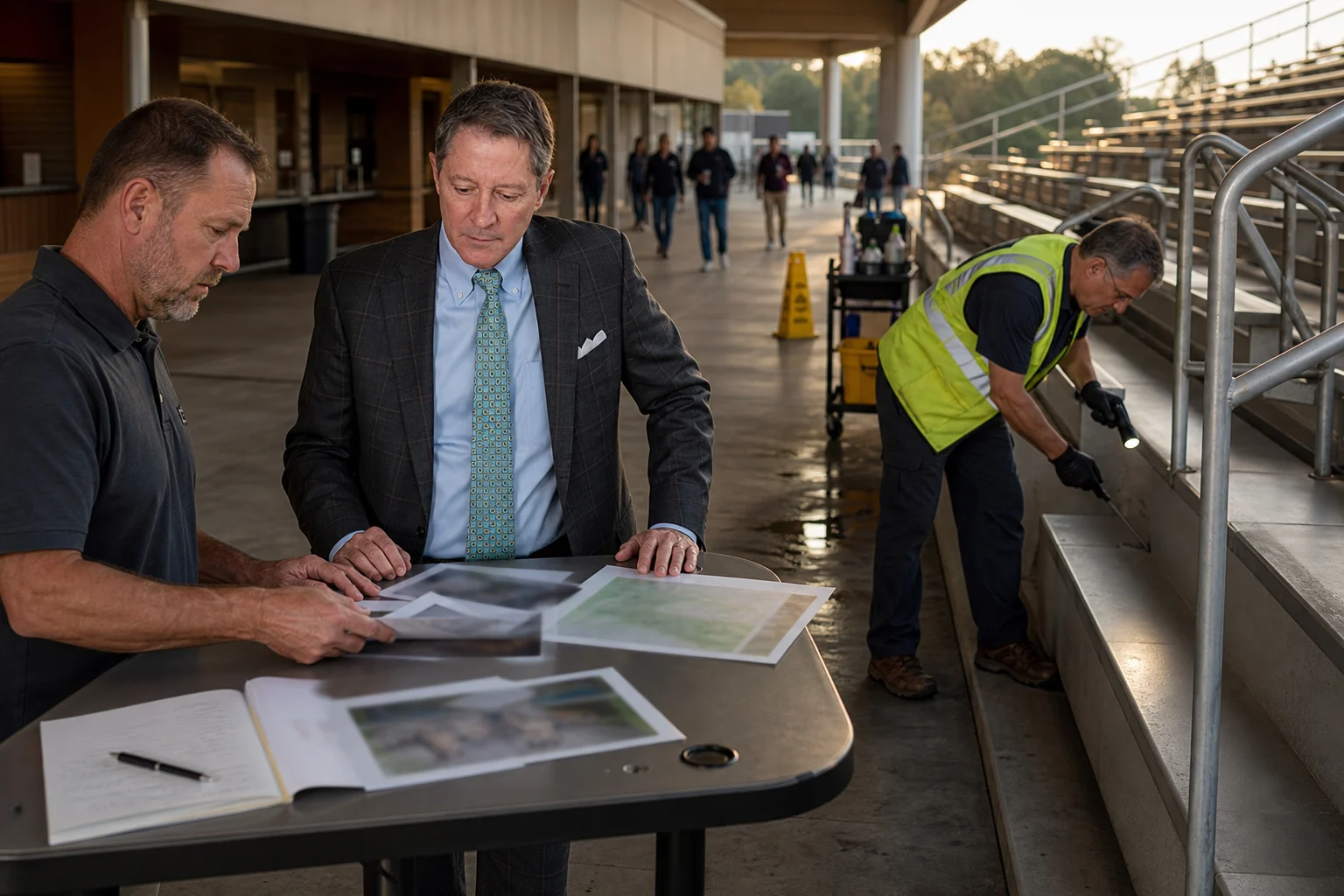
Event conditions are often temporary. A spill may be cleaned, barriers may be moved, temporary seating may be removed, and event personnel may disperse. Evidence preservation should therefore focus on both the physical scene and the organizations that may possess records.
Alabama recognizes litigation remedies relating to spoliation and, under defined circumstances, a negligence-based spoliation claim against a third party. The availability and effect of any remedy are case-specific. The better approach is to identify important material early and request its preservation before a dispute arises over what once existed.
Evidence to Collect After an Event Injury
-
Address immediate medical needs
Seek appropriate care and describe accurately when, where, and how the injury occurred. Retain discharge instructions, bills, and follow-up records.
-
Document the exact scene
Take close and wide photographs or video showing the condition, surrounding route, lighting, seating, stairs, barriers, signs, and nearby landmarks.
-
Keep event materials
Save tickets, wristbands, receipts, parking records, venue maps, event emails, text messages, and photographs taken before or after the incident.
-
Identify witnesses
Record names and reliable contact information. Note where each witness was standing and what the person observed.
-
Report the incident
Ask how to obtain the incident report and note the names or identifying information of employees, security personnel, medical staff, or officers involved.
-
Preserve digital evidence
Retain original photographs, videos, messages, location information, and social posts without editing the original files.
-
Request preservation of third-party records
A focused preservation request may identify surveillance video, inspection and cleaning records, staffing plans, security communications, incident reports, contracts, and event-operation materials.
Defenses and Deadlines Can Change the Case
Alabama retains contributory negligence. If an injured person was negligent and that negligence proximately contributed to the injury, it can completely bar recovery on a negligence claim. Contributory negligence is not a defense to wantonness, but whether the evidence supports negligence, wantonness, or either defense requires careful legal analysis.
Alabama law generally provides a two-year limitations period for personal-injury actions not arising from contract. Alabama wrongful-death actions generally must also be commenced within two years of death. Limited tolling provisions may apply when a person was below age 19 or legally insane when the claim accrued, subject to statutory details and limits.
Those general periods should not be treated as permission to wait. Identifying the defendants, preserving event evidence, and examining any public-entity procedure may need to happen much earlier.
Frequently Asked Questions
Who may be responsible for an injury at an Alabama stadium or event?
Potential parties may include the property owner, venue operator, promoter, concessionaire, maintenance contractor, seating or equipment contractor, security provider, or another person who created the danger. Responsibility depends on each party’s conduct and control, not simply whose name appeared on the event.
Does an open or visible hazard automatically defeat a claim?
Not automatically. Alabama’s open-and-obvious analysis is objective and asks whether a reasonable person in the attendee’s position would recognize the condition and risk. Lighting and surrounding circumstances may make the issue fact-dependent. Contributory negligence may also be raised as a separate defense.
Can a venue be responsible when another attendee committed an assault?
Possibly, but the assault alone does not establish venue liability. Alabama generally requires a special relationship or special circumstances before imposing a duty to protect against third-party criminal conduct, and foreseeability of the particular conduct is central to the analysis.
What evidence should be saved after a stadium fall or crowd injury?
Save photographs, video, tickets, receipts, event messages, witness information, medical records, and details about reports made to venue personnel. Potentially relevant third-party material can include surveillance video, inspection records, cleaning logs, staffing plans, contracts, security communications, and incident reports.
Does public ownership of a venue change the claim?
It may. A municipal or state-affiliated entity can raise different procedural, administrative, or immunity questions. The precise owner, operator, and responsible organization must be identified before deciding which process or deadline may apply.
How long do I have to bring an Alabama event injury claim?
Alabama generally applies a two-year limitations period to personal-injury actions not arising from contract, but the correct deadline depends on the claim, parties, and circumstances. Limited statutory tolling may apply in some cases. Public-entity involvement is another reason to obtain a prompt, case-specific review.
Body Region Involved in Bleacher-Associated Fall Injuries
View Data
| Label | Share of bleacher-associated fall injuries by body region in CPSC's 1999 national estimate |
|---|---|
| Head | 48%% |
| Upper limb | 17%% |
| Lower limb | 25%% |
| Trunk | 10%% |
Nearly half of the estimated bleacher-associated fall injuries involved the head in this historical dataset.