
Why a Police Report Does Not Necessarily Decide Fault
An officer’s narrative or fault conclusion is not necessarily controlling proof of civil liability. The officer may arrive after the collision and prepare part of the report from what the drivers or witnesses said rather than from personal observation of the impact.
In Crusoe v. Davis, the Alabama Supreme Court upheld the exclusion of a report narrative based on information gathered from drivers rather than events the officer personally witnessed. The decision distinguished that secondhand narrative from firsthand observations such as vehicle locations, damage, debris, and skid marks.
This does not mean every part of every crash report is automatically excluded or irrelevant. Alabama Rule of Evidence 803(8) provides a public-records exception for certain official observations and investigative findings, but personal knowledge, trustworthiness, hearsay within hearsay, and opinion-testimony requirements may still affect what can be used. The analysis must address the particular statement or observation rather than treating the entire report as conclusive.
Evidence That Can Challenge a Police Fault Conclusion
| Evidence | What It May Help Show | Important Caution |
|---|---|---|
Authenticated photographs |
The accident location, objects, vehicle positions, damage, and relevant scene conditions |
The images need a proper foundation showing that they fairly represent what they depict |
Eyewitness testimony |
What a person actually saw before, during, or immediately after the collision |
An officer’s repetition of someone else’s account is different from firsthand testimony and may raise hearsay issues |
Officer’s firsthand observations |
Vehicle locations, visible damage, debris, skid marks, and other conditions observed after arrival |
Those observations should be separated from conclusions based primarily on driver statements |
Vehicle and roadway evidence |
Damage patterns, tire marks, roadway gouges, debris, and possible areas of impact |
The evidence should be preserved, documented, and interpreted with an appropriate foundation |
Qualified reconstruction analysis |
Direction of force, speed, point of impact, or lane of impact when supported by physical evidence |
The witness must be qualified, and the opinion must rest on sufficient case-specific evidence |
Potential electronic records |
Timing or movement issues if relevant records exist |
Do not assume vehicle, phone, camera, or other electronic data exists or can be retrieved |
Photos and Witnesses in a Disputed Alabama Crash Report
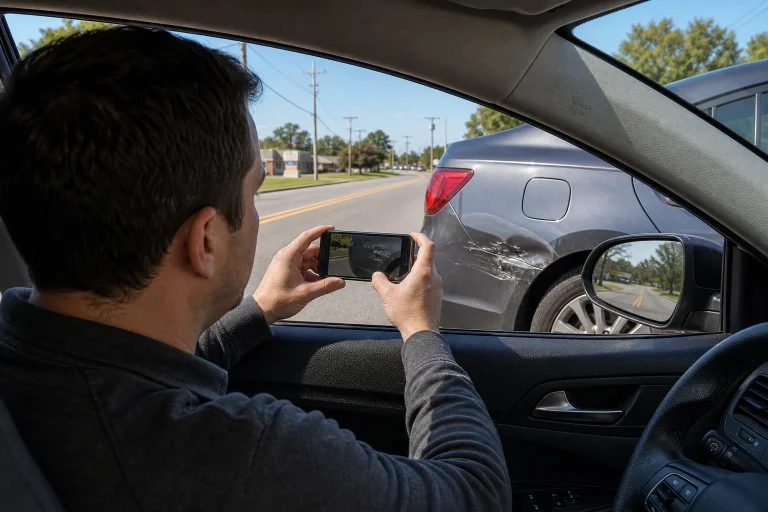
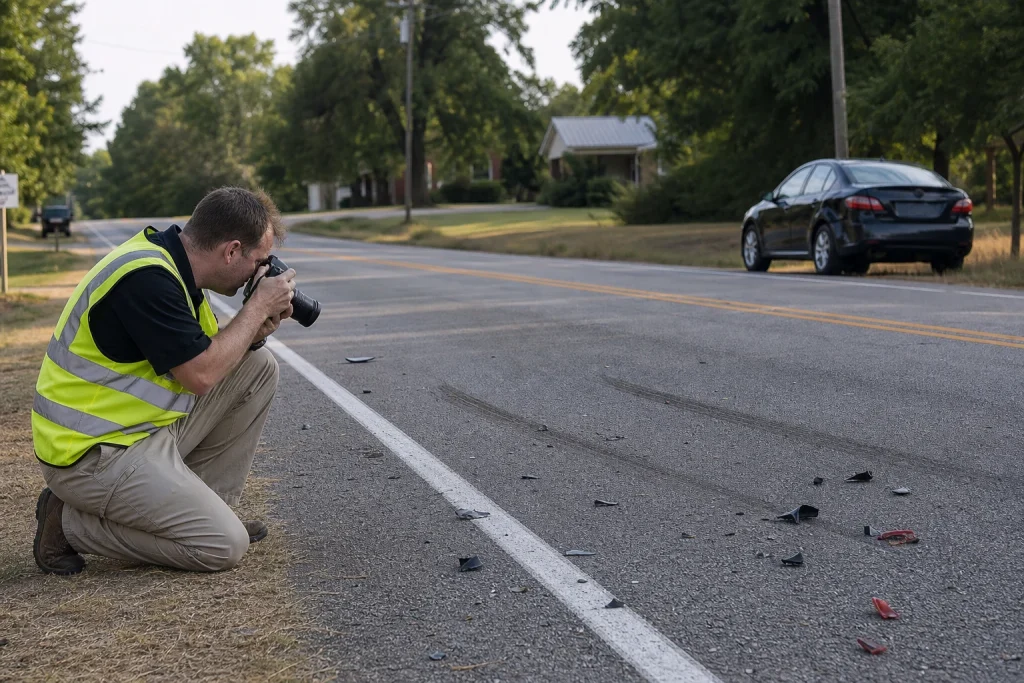
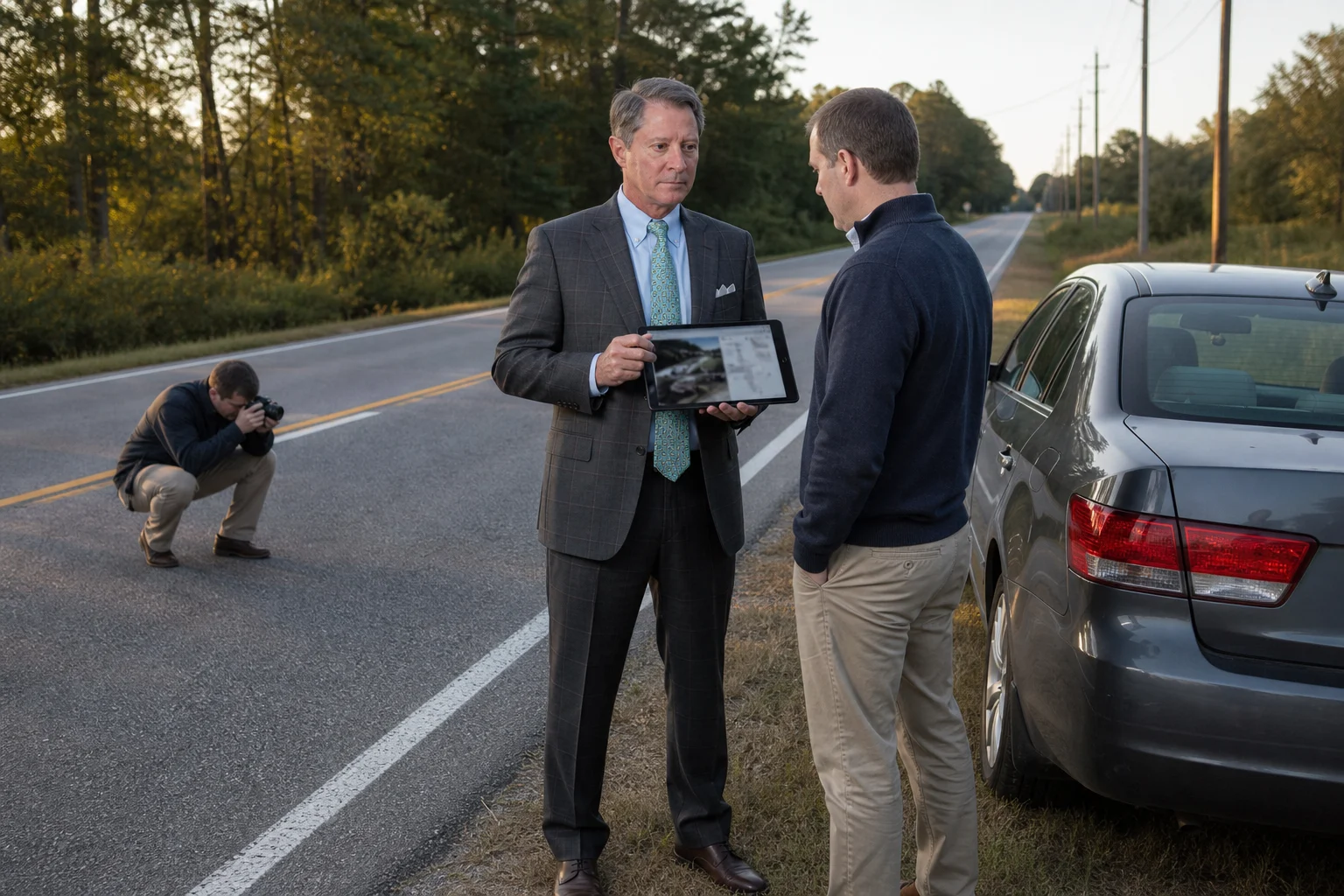
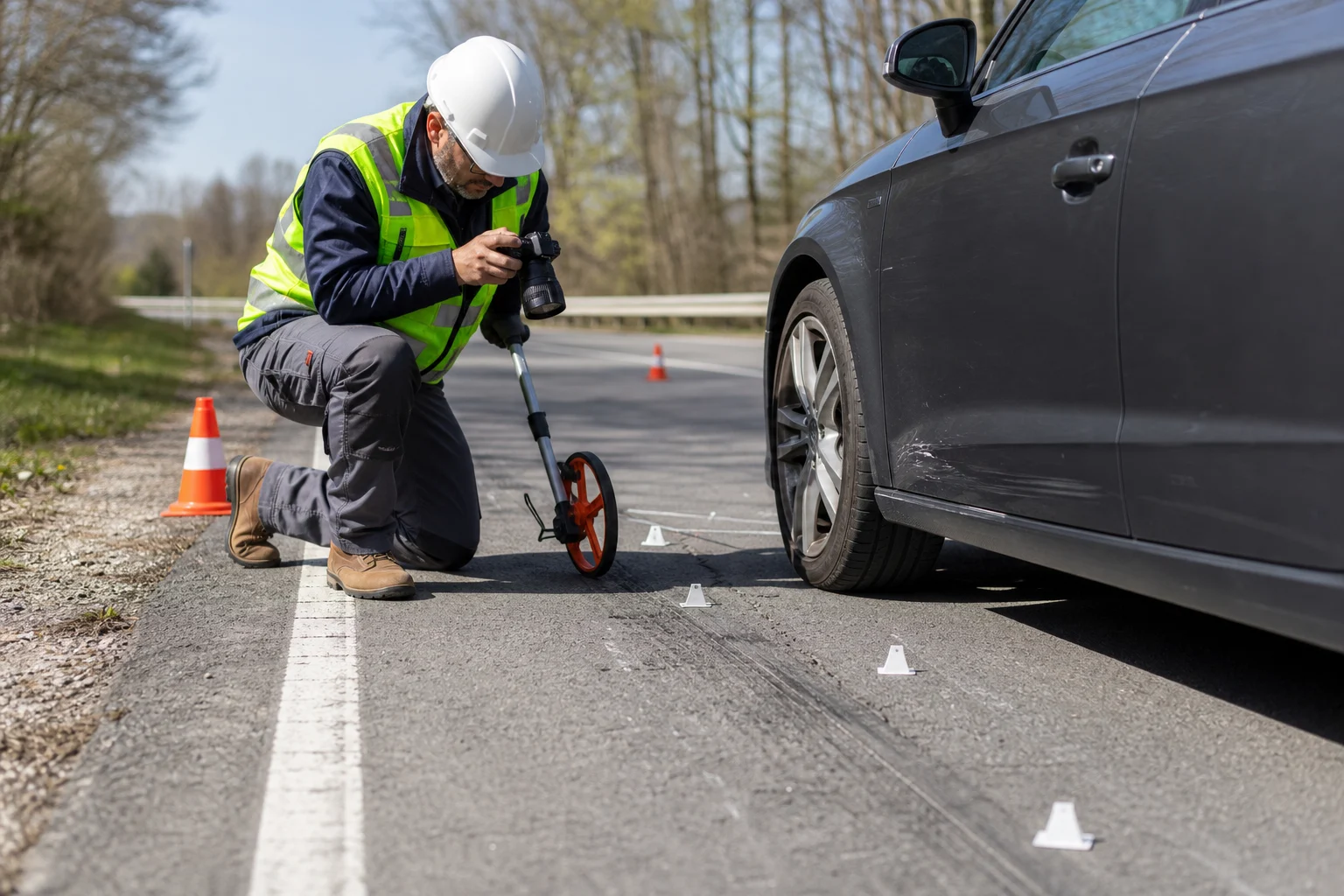
Properly authenticated photographs may be admissible when they help a factfinder understand an accident location, relevant objects, or conditions. Existing images should be reviewed for details that can be compared directly with the report’s diagram and narrative, such as vehicle resting positions, visible damage, lane markings, obstructions, or debris.
Preserve original images and recordings rather than relying only on screenshots, cropped copies, or social-media versions. Identify who captured each item, when it was created, and what it depicts. Those details may become important when establishing authenticity.
A witness who actually saw the collision can provide an account independent of the officer’s secondhand summary. Record the witness’s name and contact information and identify what the person personally observed. An officer ordinarily cannot establish the truth of another person’s account merely by repeating it unless an applicable hearsay rule permits the statement.

Physical Evidence That Can Test an Alabama Police Report
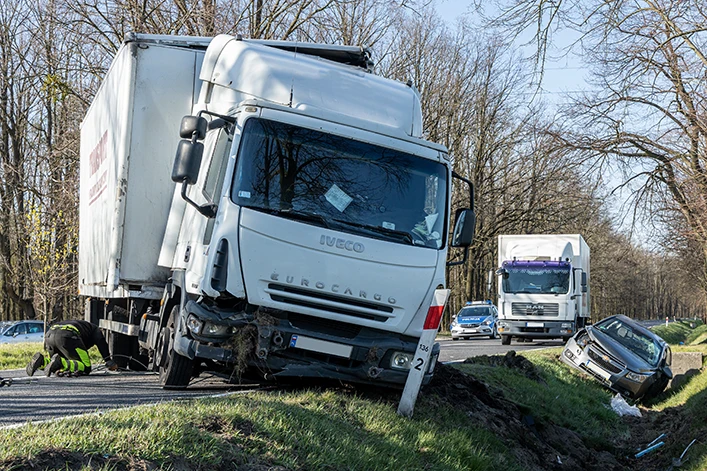
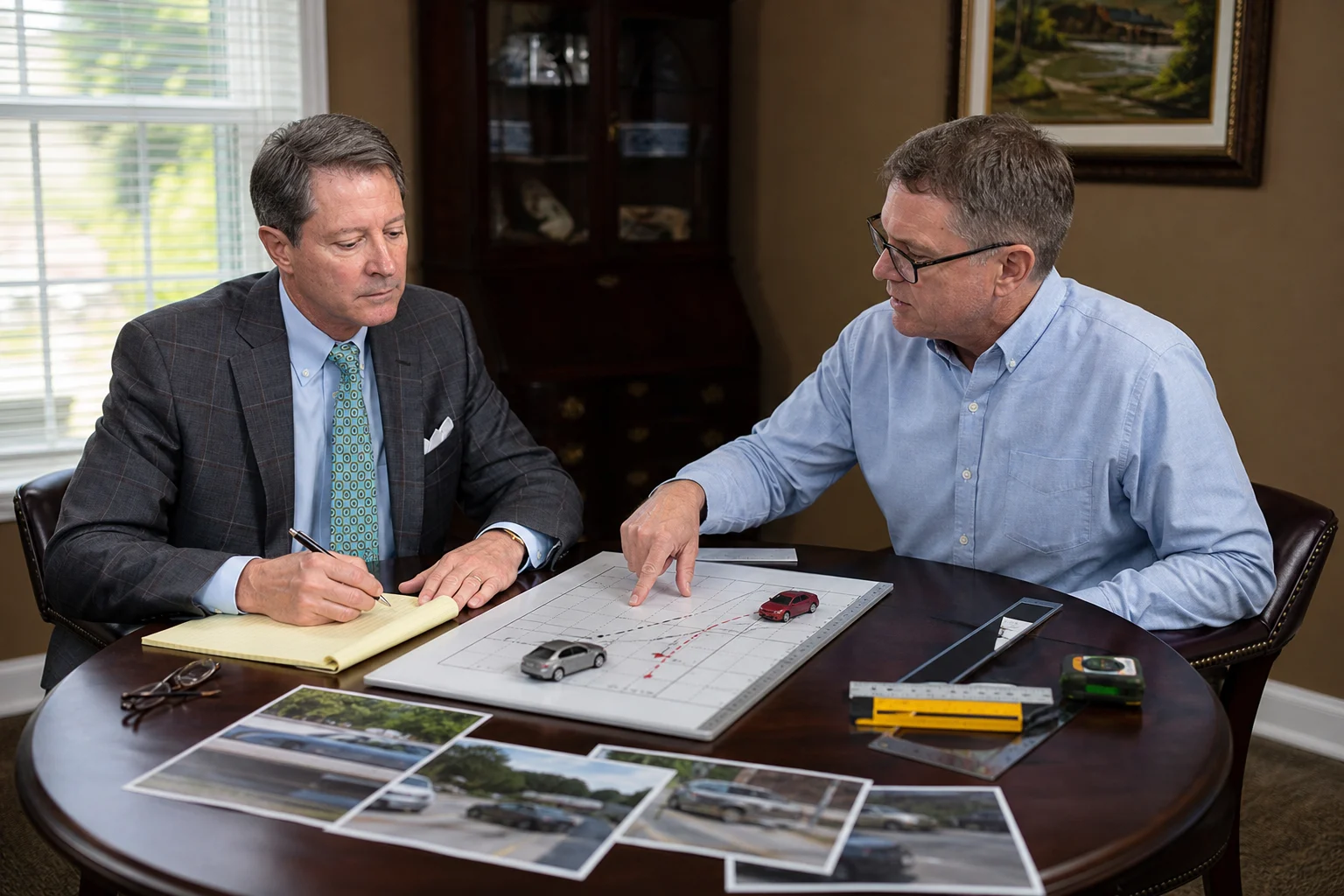
Vehicle damage, tire marks, roadway gouges, and debris can provide a foundation for qualified accident-reconstruction testimony. Depending on the available evidence, reconstruction analysis may address direction of force, speed, point of impact, or the lane in which the impact occurred.
This evidence can be especially important when the report’s conclusion rests on an assumption that does not fit the physical record. In a rear-end collision dispute, for example, the damage and roadway evidence may help test a simplified account of how the vehicles came together. The same principle applies whenever the physical evidence conflicts with the report’s diagram or narrative.
Reconstruction is not simply a matter of offering a different opinion. The analysis must be tied to preserved evidence, and the person offering it must be qualified to explain the methods and conclusions involved.
Electronic Evidence for a Disputed Alabama Crash Report
Do not assume that electronic vehicle data or other digital records exist or can be retrieved. If electronic information may be relevant, raise the issue promptly so counsel can evaluate possible vehicle, phone, app, camera, or other record sources.
The existence, preservation, authentication, and admissibility of any such record require a case-specific analysis. A focused traffic-collision case review can help determine which potential sources are relevant without treating unavailable data as a certainty.
How to Review an Alabama Crash Report After a Collision
-
Obtain the Complete Report
Get the full report, diagram, continuation pages, and any listed attachments. The Alabama Law Enforcement Agency provides information about obtaining crash reports through its crash-report service.
-
Create a Line-by-Line Issue List
Identify the specific statements, diagram details, vehicle directions, lane assignments, witness information, or impact descriptions you believe are inaccurate or incomplete.
-
Compare the Report With Independent Evidence
Match each disputed point against photographs, witness observations, vehicle damage, debris, tire marks, roadway gouges, and any other preserved material.
-
Separate Observations From Secondhand Statements
Determine which details the officer personally observed and which appear to come from a driver, passenger, or witness account.
-
Ask About Agency and Legal Options
Ask the investigating agency what process it uses for clerical corrections or supplemental information. The reviewed sources do not establish a uniform statewide procedure requiring an agency to revise a disputed fault conclusion, so do not rely on report correction as the only way to contest fault.
Why Fault Evidence and Timing Matter in Alabama
Alabama’s Contributory-Negligence Rule
Alabama follows contributory negligence. If a plaintiff’s own negligence proximately contributed to the injury, it can bar recovery. The issue is ordinarily one for a jury, although a court may decide it as a matter of law when reasonable people could reach only one conclusion.
That rule makes evidence about each driver’s conduct especially consequential. A report that assigns fault should be tested promptly against the available evidence rather than accepted without further investigation.
Do Not Assume Every Deadline Is the Same
Alabama’s general limitations statute includes two-year periods for personal-injury and injury-to-rights actions and certain property-damage and vicarious-liability actions. That should not be treated as a universal deadline.
The applicable time limit may change based on the claim, defendant, or notice requirement. Preserving evidence and obtaining advice early can help avoid relying on a deadline that does not apply to the particular case.
Frequently Asked Questions About Disputed Alabama Crash Reports
Can I Make the Police Change the Report?
You may ask the investigating agency what procedure it uses for clerical corrections or supplemental information. However, the reviewed official sources do not establish a uniform statewide process requiring an agency to change an officer’s disputed fault conclusion. Preserve your evidence even if you request a correction.
Does the Police Report Decide Who Is Legally at Fault?
Not necessarily. An officer’s narrative or conclusion is not automatically controlling proof of civil liability. Firsthand observations, secondhand statements, hearsay rules, trustworthiness, and opinion-testimony requirements can affect how particular parts of a report are treated.
What Evidence Should I Preserve First?
Preserve original photographs and recordings, witness contact information, the vehicle’s condition, roadway or physical evidence, and the complete report with its diagram and attachments. Seek advice before material evidence is repaired, discarded, or otherwise altered.
Can Electronic Vehicle or Phone Data Help?
Possibly, but do not assume relevant data exists or is retrievable. Whether any vehicle, phone, app, camera, or other digital record is available, relevant, authentic, and admissible requires a case-specific review.
How Long Do I Have to Challenge Fault?
A report-correction request and a civil claim are different matters. Alabama’s general limitations statute includes two-year periods for several types of injury and property claims, but different claims, defendants, and notice rules may involve different deadlines.