


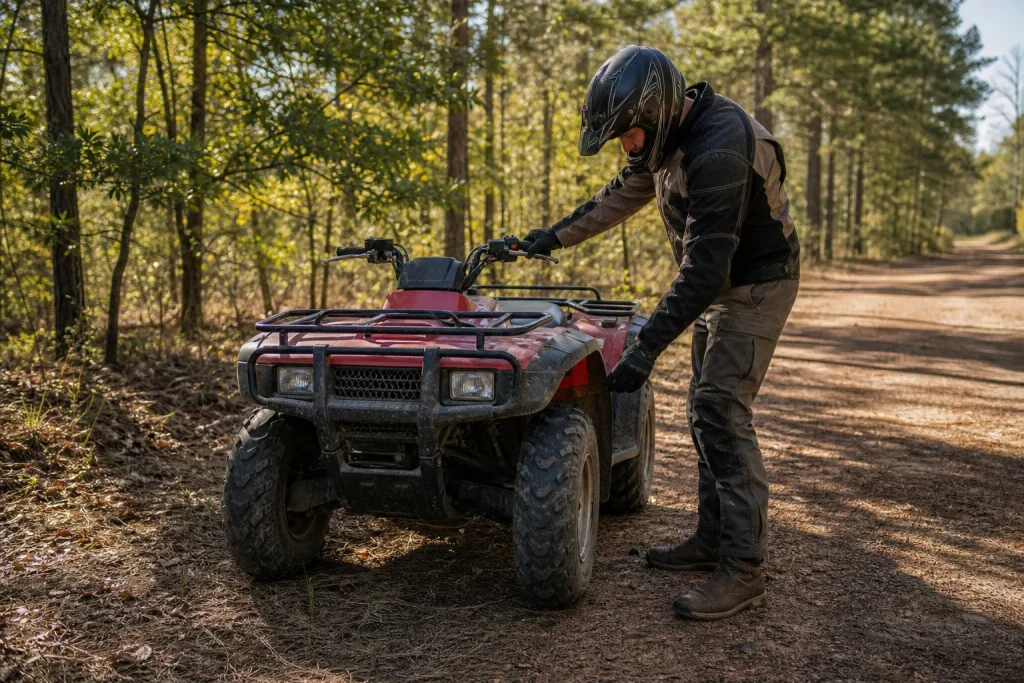
ATVs and Side-by-Side Vehicles Are Not the Same Category
| Feature | Traditional ATV | ROV or UTV |
|---|---|---|
Seating |
Straddle seat |
Side-by-side seating |
Controls |
Handlebars |
Automotive-style steering, throttle, and braking controls |
Classification |
Treated by CPSC as a traditional ATV |
Distinguished by CPSC from traditional ATVs |
What Current CPSC Data Show About Serious OHV Crashes
CPSC’s 2024 off-highway vehicle report estimated 509,900 U.S. emergency-department-treated injuries during 2019 through 2023, an annual average of approximately 102,000 within the report’s scope. The report covers several off-highway vehicle categories, so these figures should not be attributed exclusively to traditional ATVs.
A CPSC special study of 2023 injuries estimated that 54,200 involved an overturn. That represented 63 percent of responses for which overturn status was known. The study also estimated that 59,700 injured people were partially or fully ejected, representing 78 percent of responses for which ejection status was known.
For Alabama, CPSC recorded 77 reported off-highway-vehicle-related deaths arising from 76 fatal incidents that occurred during 2019 through 2021. The agency cautioned that state counts were not adjusted for population or other demographic characteristics.
These findings show why investigators may examine overturning, collisions, and ejection when reconstructing a crash. They do not mean that every vehicle will overturn, that every ejection has the same cause, or that a crash mechanism proves a particular vehicle was defective. The specific terrain, vehicle condition, rider and passenger positions, restraints or protective equipment, and sequence of events still need to be documented.
CPSC Safety Recommendations for ATV Riders
CPSC recommends several steps intended to reduce the risk of an ATV accident or serious injury:
- Complete hands-on rider training.
- Wear a helmet and other protective equipment.
- Avoid alcohol when operating an ATV.
- Keep ATVs off paved and public roads except for lawful crossings.
- Use age-appropriate youth models for riders younger than 16.
- Carry no more passengers than the vehicle has designated seats.
Passenger capacity should be determined from the particular model rather than from a general assumption about all off-highway vehicles. Traditional ATVs and side-by-side vehicles use different seating arrangements, and a vehicle should not carry more people than it has designated seats.
These are federal safety recommendations. They should not be described as though each recommendation were automatically a statewide Alabama criminal or traffic-law requirement. Questions about operating a particular vehicle on a particular road can depend on the vehicle and location and require specific legal review.
Questions That May Shape an ATV or UTV Accident Investigation
An overturn, collision, or ejection describes part of what happened, but it does not identify who was responsible. A useful investigation starts with the people involved, the vehicle, the route or property, and the sequence of events before and during the crash.
Operation, Ownership, Rental, and Property Issues
Investigators may need to determine who was operating the vehicle, whether passengers were present, where each person was seated, and what happened before control was lost. Rider training, alcohol use, passenger capacity, road use, terrain, signs, and visible trail or property conditions may all be relevant to understanding the sequence.
Ownership and control also matter. The vehicle may have been owned, borrowed, or rented, and different people or businesses may have held maintenance, inspection, instruction, or incident records. When a crash occurs on property controlled by someone other than the rider, the location and the circumstances under which riding was allowed also need to be documented.
These facts may be relevant to evaluating negligent operation, rental practices, maintenance, or property-related questions. The presence of one fact does not establish liability by itself; responsibility depends on how the available evidence fits together.
Vehicle Condition and Product-Related Questions
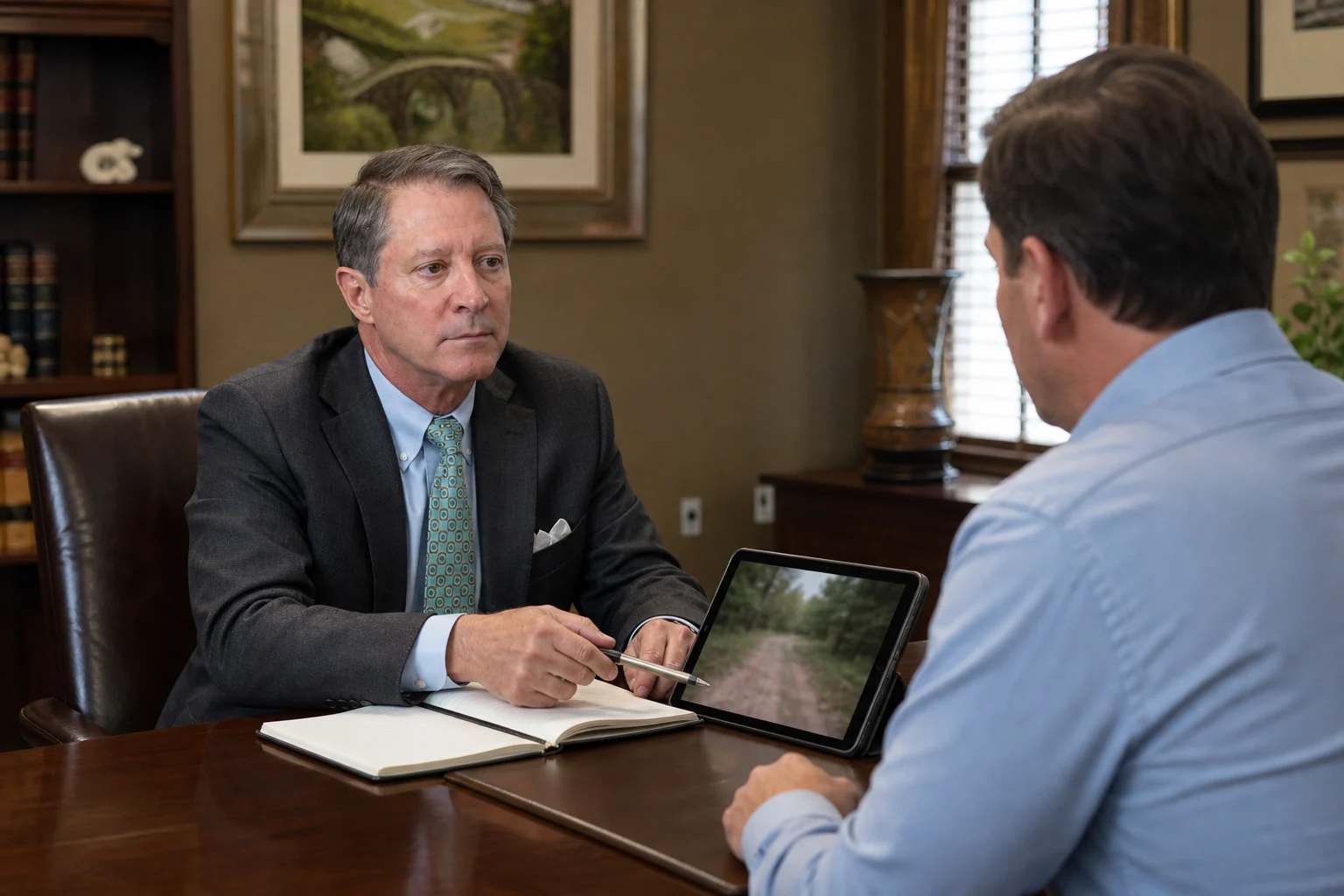
A vehicle-focused investigation should identify the exact manufacturer, model, model year, and vehicle identification or serial number. Investigators may also examine maintenance history, prior repairs, replacement parts, modifications, manuals, warnings, and any recall or safety-notice work.
Product-related questions are fact-dependent. Overturning or ejection may help explain the crash sequence, but CPSC’s national statistics do not determine whether an individual vehicle, component, warning, repair, or modification contributed to a particular accident. That assessment requires preservation of the physical evidence and case-specific legal and technical analysis.
Vehicle History, Recall Records, and Physical Evidence
The exact identity and history of the vehicle can become important when evaluating maintenance, repair, modification, or product questions. Record the manufacturer, model, model year, and identification number directly from the vehicle when it is safe to do so. Keep purchase or rental paperwork, manuals, photographs, maintenance invoices, repair records, replacement-part information, and communications about prior problems.
Current CPSC and manufacturer recall information should be checked using the exact vehicle details. Preserve any recall notice and documents showing whether a remedy was offered or completed. Model year, identification number, repair history, modifications, and recall completion can affect how the vehicle’s history is understood.
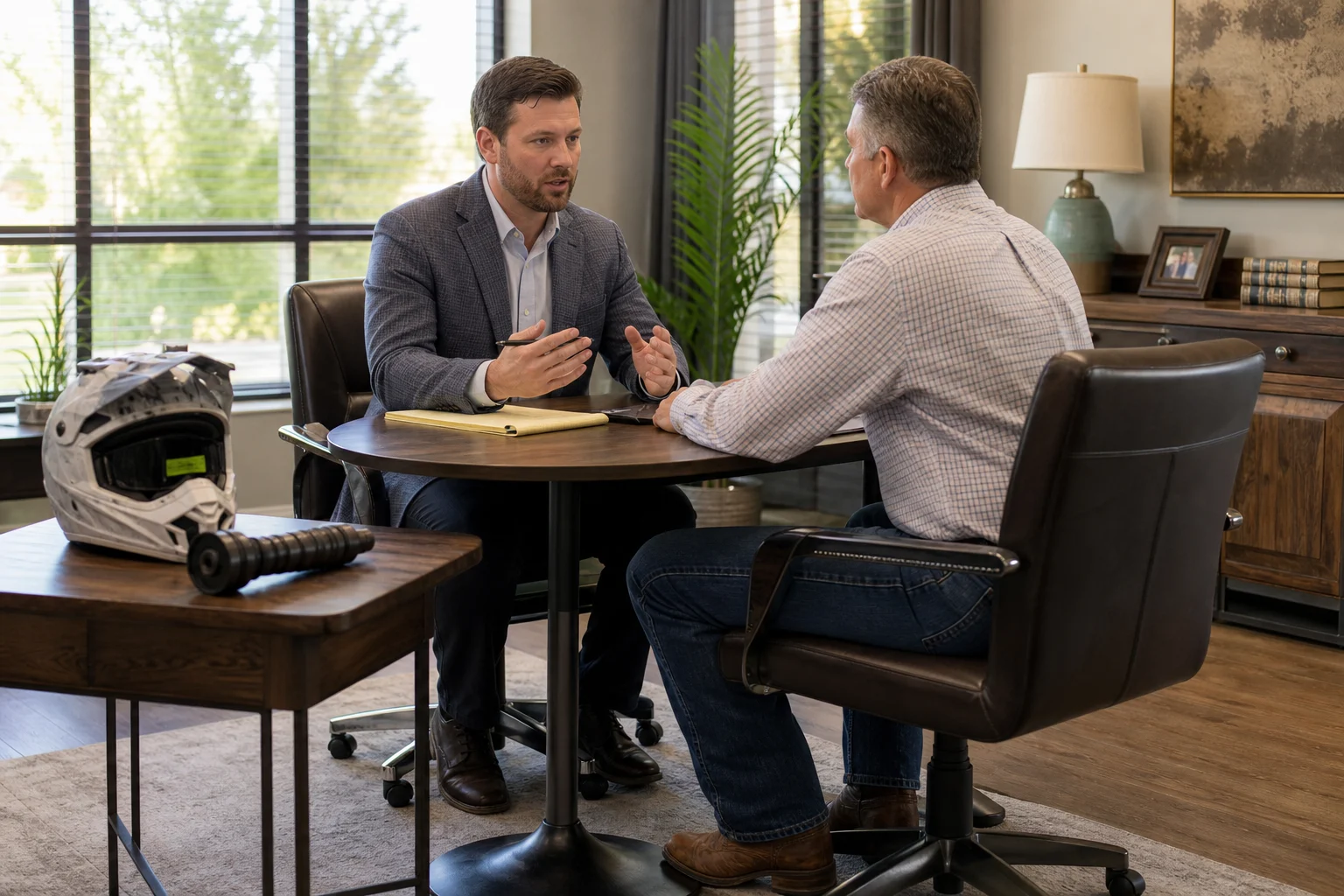
The physical condition of the vehicle may provide information that records alone cannot. Detached parts, tires, restraints, helmets, protective clothing, manuals, photographs, videos, and available electronic material should therefore remain secure and substantially unchanged until potential inspection and evidence-preservation needs have been assessed.
What to Do After an ATV or UTV Crash
-
Address immediate medical and safety needs.
Call for emergency assistance when needed and obtain an appropriate medical evaluation. Keep copies of discharge instructions, bills, and follow-up recommendations.
-
Report the incident.
Notify the appropriate law-enforcement agency, property operator, or rental business. Request the report or incident number and preserve any written statements.
-
Document the scene.
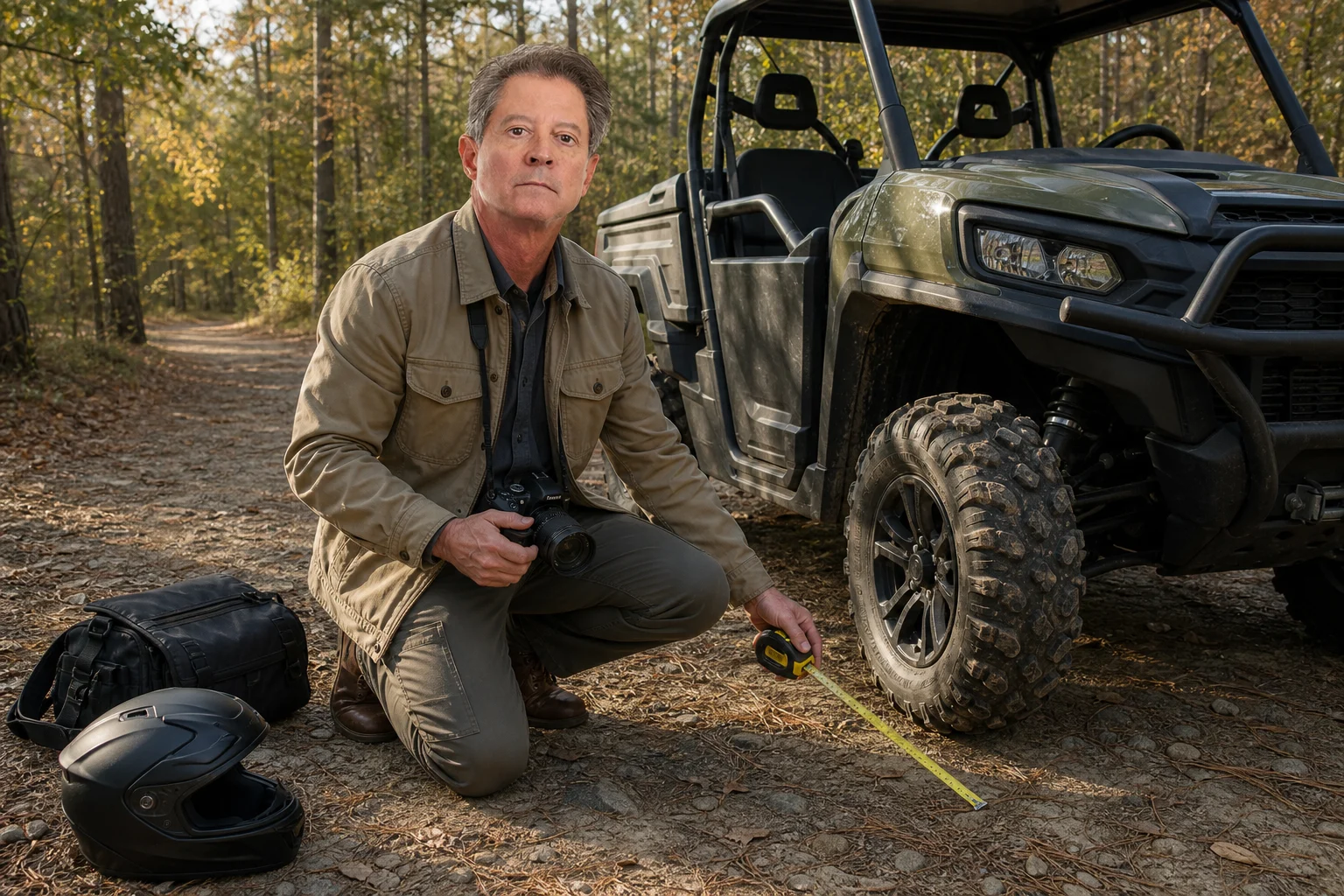
Photograph the vehicle, terrain, road or trail, debris, marks, signs, weather conditions, and visible injuries when it is safe to do so.
-
Identify witnesses.
Collect names and contact information for riders, passengers, bystanders, property personnel, and first responders.
-
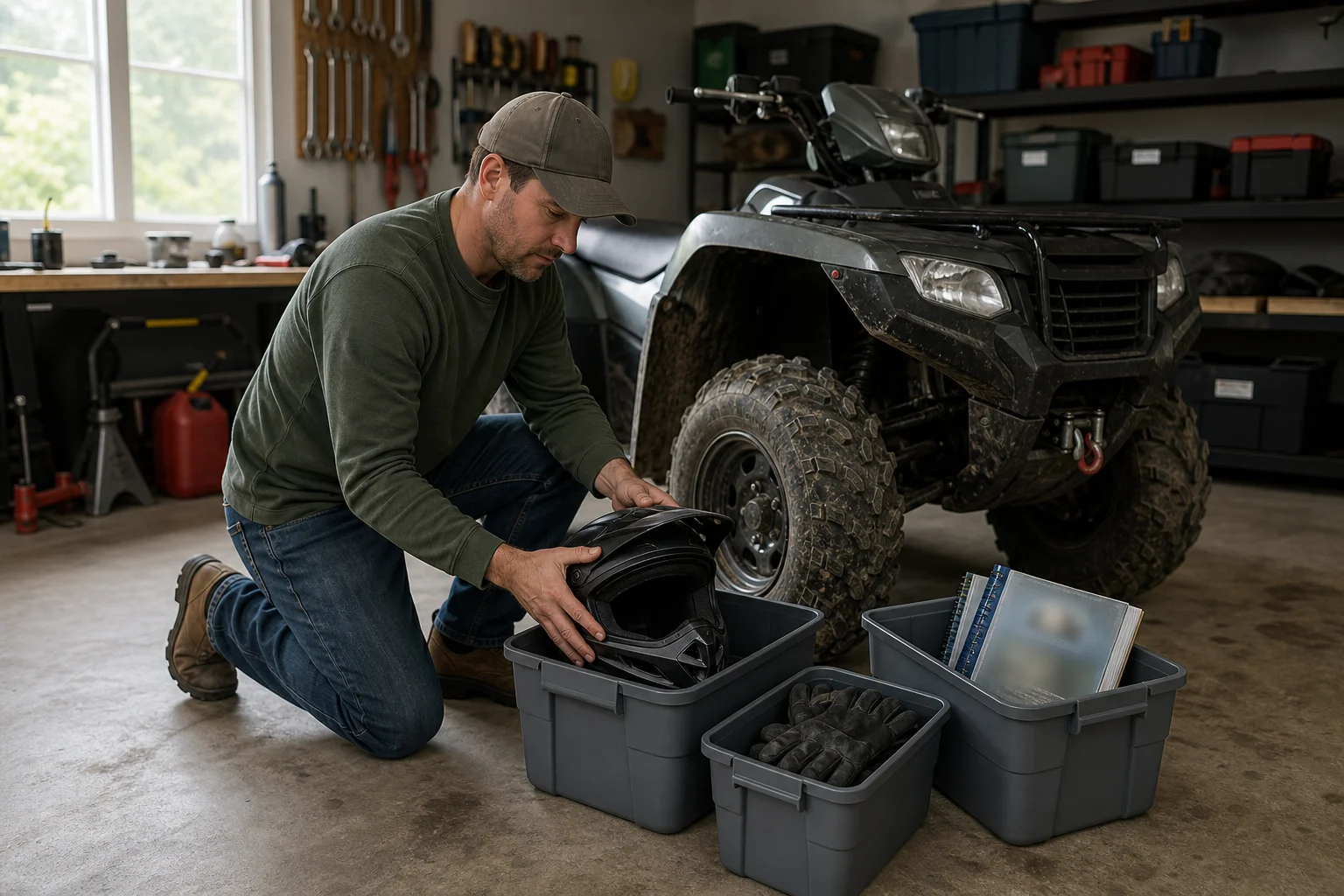
Secure the vehicle and safety equipment.
Store the vehicle, helmet, clothing, restraints, and detached parts without cleaning, testing, repairing, or altering them.
-
Collect vehicle and recall information.
Record the manufacturer, model, model year, and identification number. Gather purchase, rental, maintenance, repair, modification, and prior recall-work records, and arrange for a current recall and safety-notice check.
-
Obtain prompt legal advice.
Ask about evidence-preservation responsibilities, available records, insurance issues, potentially relevant parties, and the filing deadline for the particular claim.
Do Not Wait to Investigate a Filing Deadline
Deadlines should be evaluated for the specific injury, parties, and legal theories involved. A rider or family should not assume that one general rule resolves every ATV or UTV matter, and delay can also make photographs, witness information, records, and physical evidence more difficult to secure.
For a fatal accident, Alabama Code Section 6-5-410 authorizes the decedent’s personal representative to bring a wrongful-death action when the decedent could have pursued the underlying claim if death had not occurred. The statute states that the action must be commenced within two years after death.
Standing, venue, damages, and the interaction between wrongful death and any other claim require attorney analysis. The wrongful-death rule should not be used to calculate the deadline for every nonfatal injury or product-related matter. Claim theory, the parties involved, and other circumstances can require a different analysis, so the applicable deadline should be reviewed promptly rather than estimated from a general article.
Frequently Asked Questions About Alabama ATV and UTV Accidents
Is a side-by-side UTV the same as a traditional ATV?
No. CPSC distinguishes traditional ATVs, which use a straddle seat and handlebars, from ROVs and UTVs, which generally have side-by-side seating and automotive-style steering, throttle, and braking controls.
Can an ATV or UTV be operated on a public road in Alabama?
Do not assume the answer is universally yes or no based only on the vehicle’s registration or how others use similar vehicles. The correct analysis can require review of the particular vehicle and location. CPSC recommends keeping ATVs off paved and public roads except for lawful crossings, but that safety recommendation should not be presented as a complete statement of Alabama law.
Does a rollover or ejection prove that the vehicle was defective?
No conclusion about a particular product can be drawn from the crash mechanism alone. CPSC data show that overturning and ejection occurred frequently among known responses in its 2023 special study, but a specific vehicle requires its own factual and technical investigation.
Who should be included in the investigation?
No single list fits every case. Relevant information may be held by the operator, owner, rental business, property operator, seller, manufacturer, maintenance provider, or repair facility. Whether any person or business is legally responsible depends on the evidence and applicable law.
How can I determine whether the vehicle was recalled?
Record the exact manufacturer, model, model year, and identification number. Check current CPSC and manufacturer recall information, and retain notices and documents showing whether any prior remedy or repair was completed. Recall history is one part of a broader vehicle-specific investigation.
What should I do with the ATV or UTV after the crash?
Keep it secure and substantially unchanged. Do not repair, test, clean, alter, sell, or discard the vehicle or detached parts before potential evidence-preservation and inspection needs have been evaluated.
How long does an Alabama family have to file a wrongful-death action?
Alabama Code Section 6-5-410 states that the decedent’s personal representative must commence the wrongful-death action within two years after death. Questions about who may serve, where to file, and how this rule interacts with other claims require attorney review.
Estimated U.S. Emergency-Department-Treated OHV Injuries, 2019–2023
View Data
| Label | Estimated emergency department-treated injuries involving off-highway vehicles within the CPSC report scope |
|---|---|
| 2019 | 95,900 |
| 2020 | 112,300 |
| 2021 | 106,600 |
| 2022 | 94,700 |
| 2023 | 100,400 |
The series shows annual variation in estimated emergency-department-treated injuries; it should not be presented as evidence that any particular product, behavior, or policy caused the changes.